End of the Age of Innocence
Pinehurst, North Carolina • traditional stained glass work
The Project
The Commission
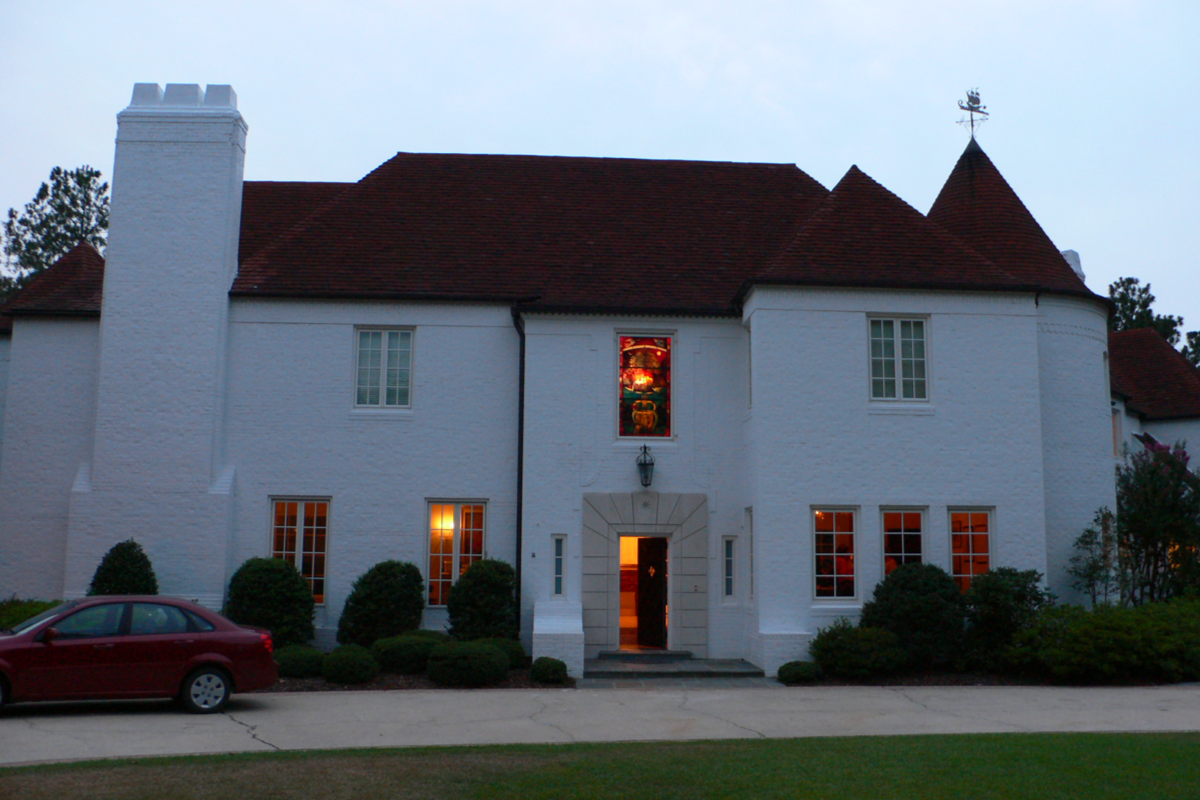
This window was commissioned for a private residence in Pinehurst, North Carolina. The client requested a work using medieval symbolism, but left the subject matter and its treatment entirely in the artist's hands. During early discussions, the Lady and the Unicorn tapestries emerged as a natural starting point — works of extraordinary richness whose imagery, once entered, begins to generate its own logic.
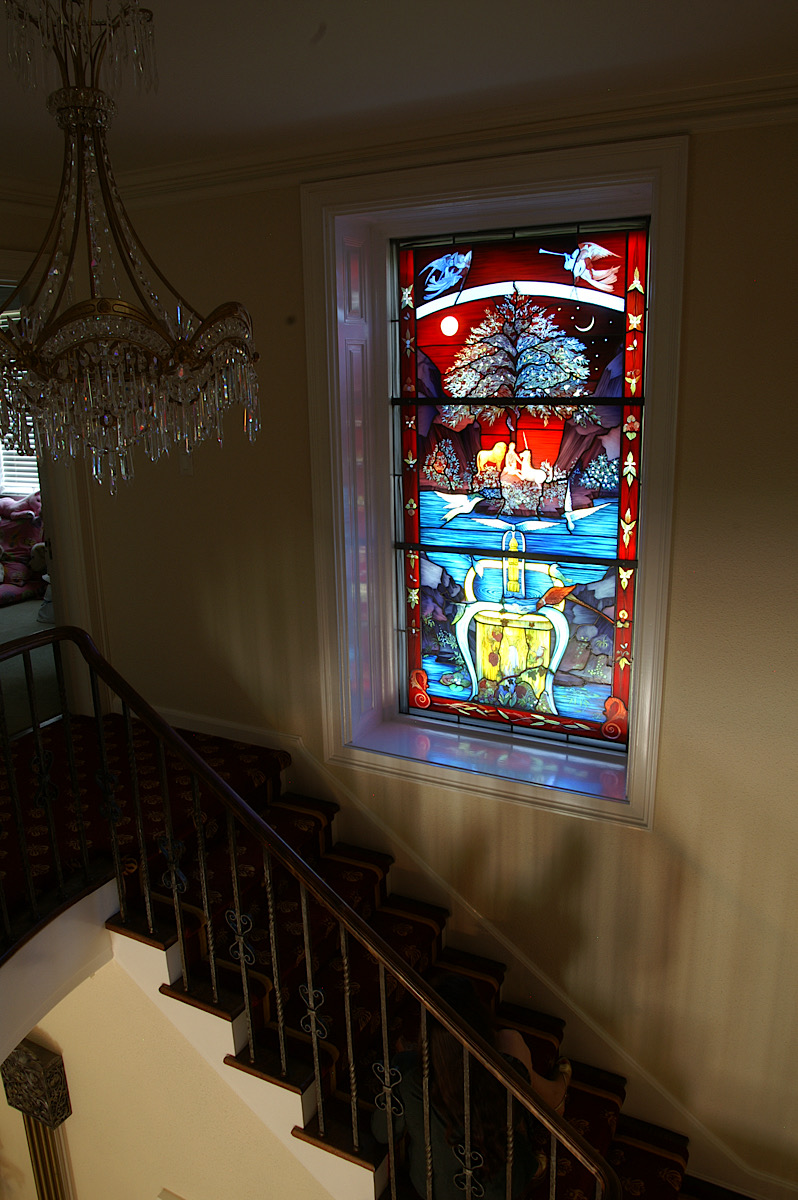
As the design developed, the central figures receded into the landscape and three distinct worlds emerged within the composition: Heaven at the top, Paradise in the middle register, and Earth in the foreground. The window takes its title from the mood of that moment — the threshold between innocence and what lies beyond it.
Pinehurst Staircase Window
Pinehurst, North Carolina, USA • 2005

The Composition
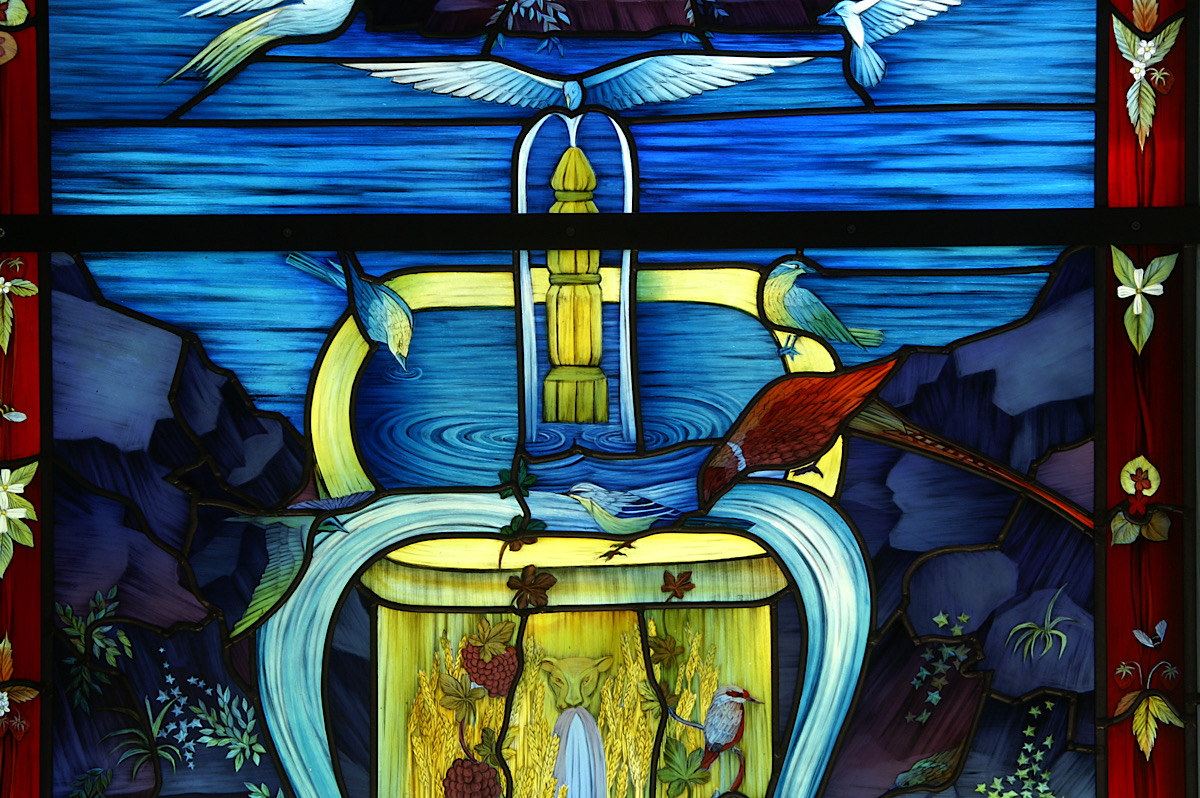
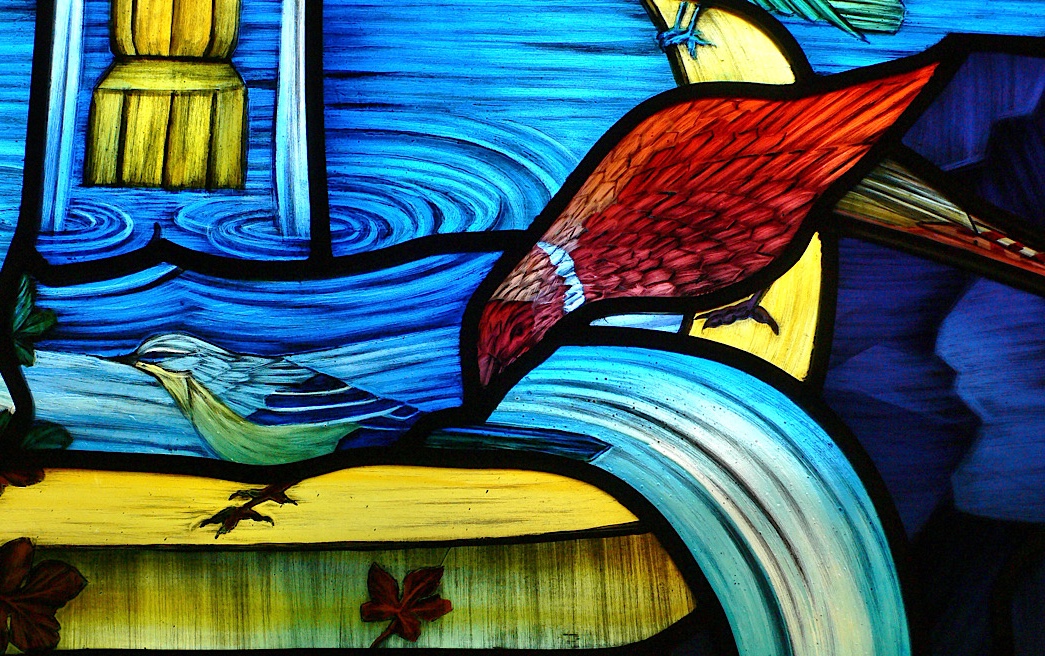
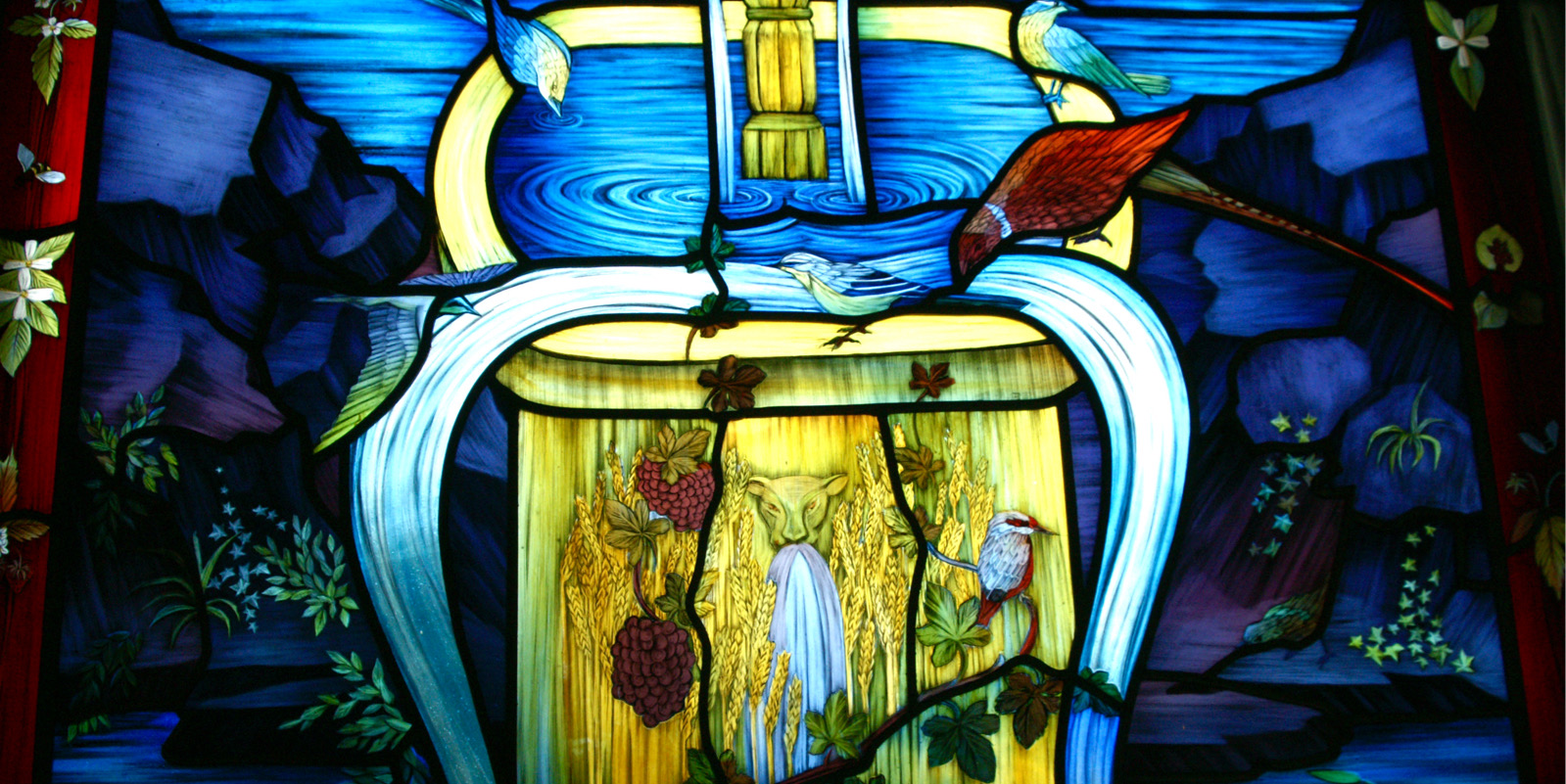
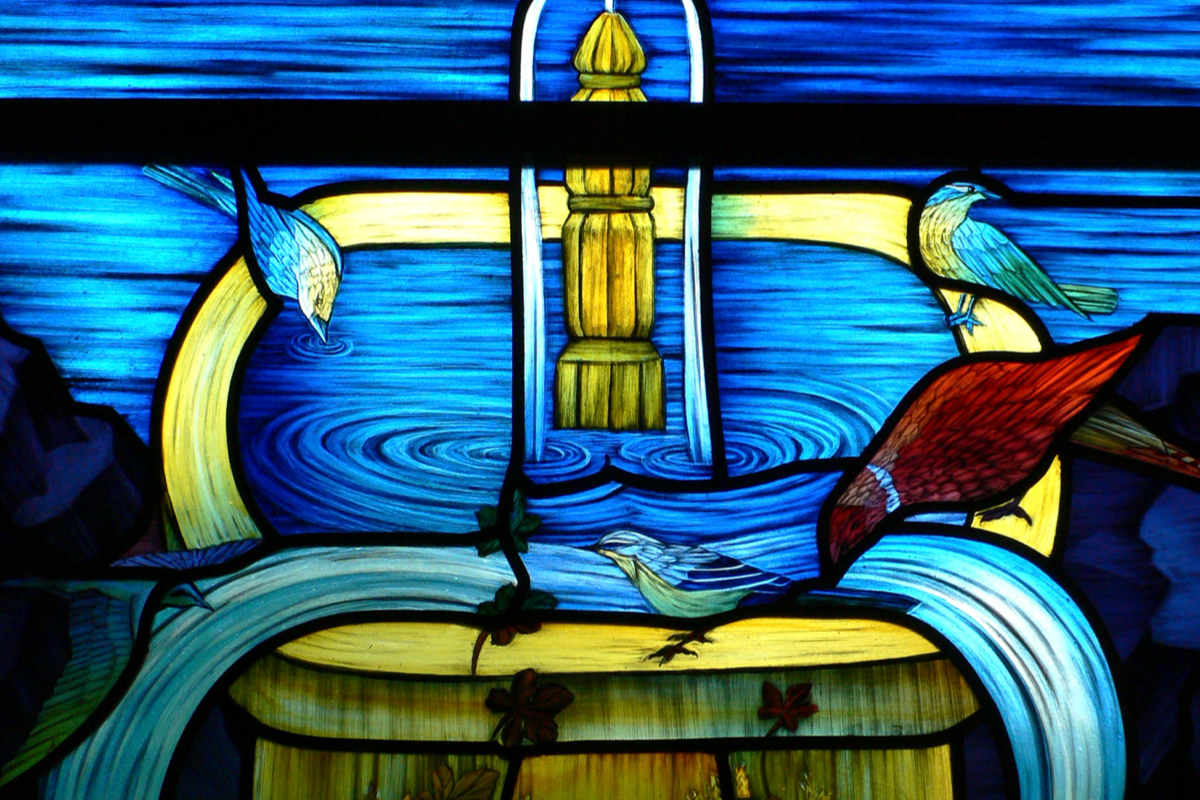
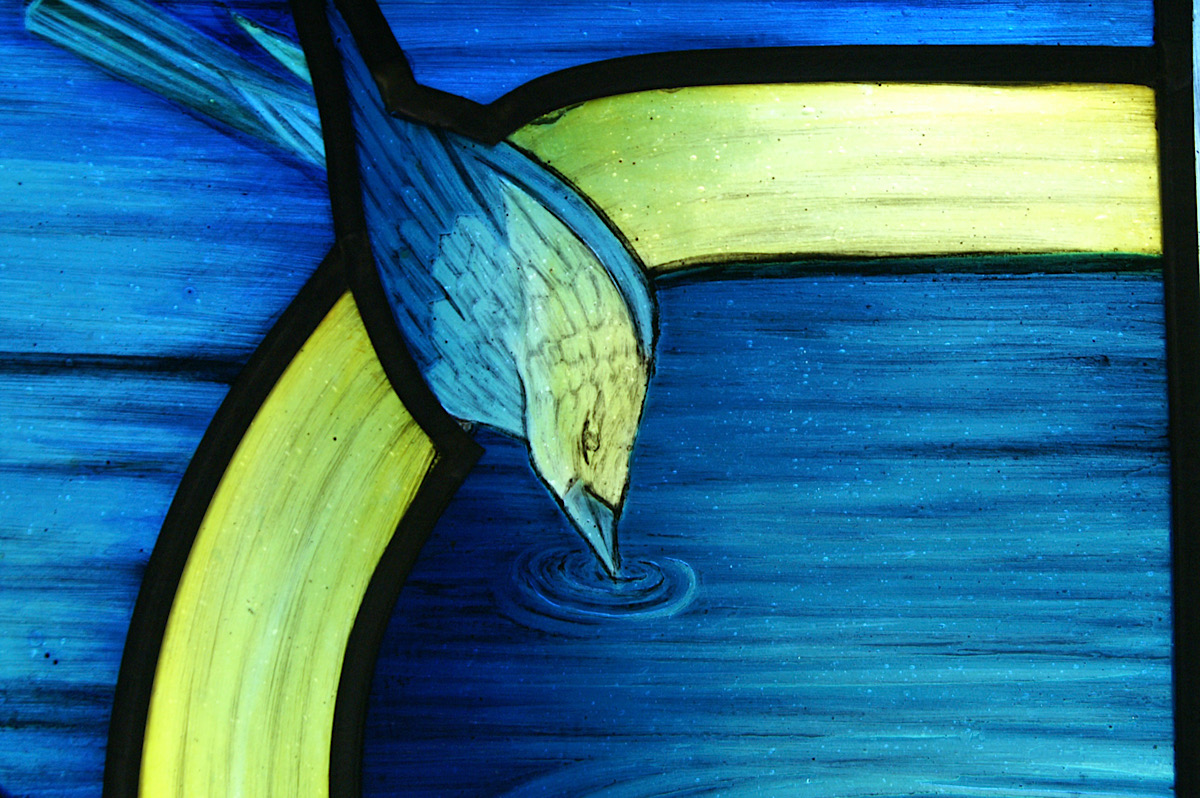
At the base of the window lies Earth — a fountain drawn from a second unicorn tapestry, pouring water into a pool alive with birds, fish, and plants. The fountain is an ancient symbol of the water of life, of immortality and eternal youth. A kingfisher, a pheasant, and water flowing from the mouth of a decorative lion all derive directly from that source.
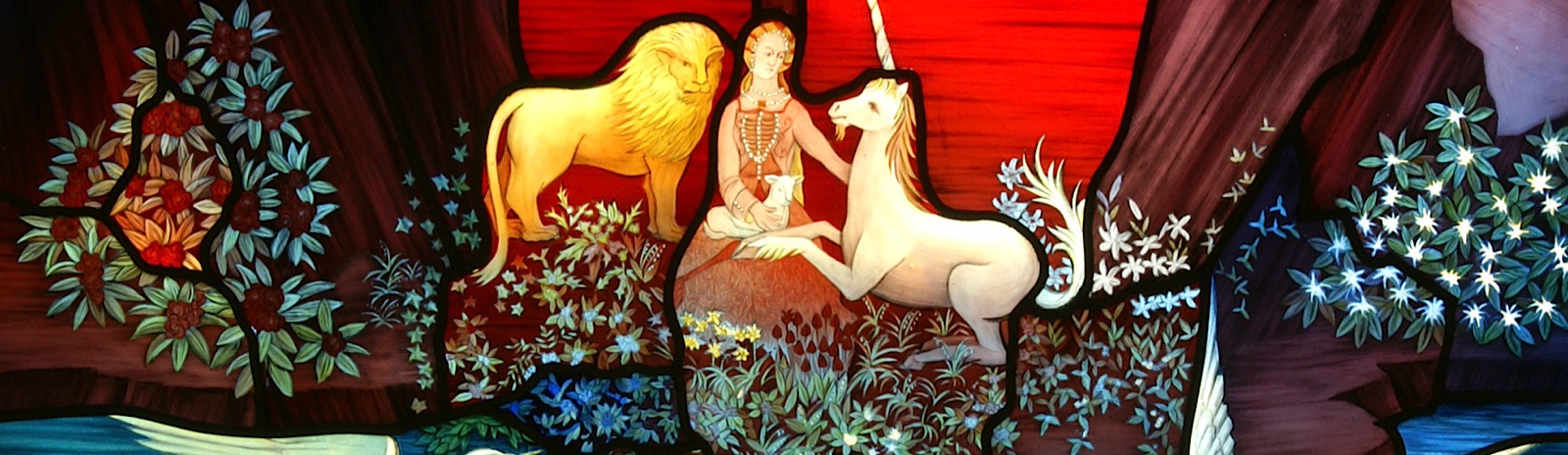
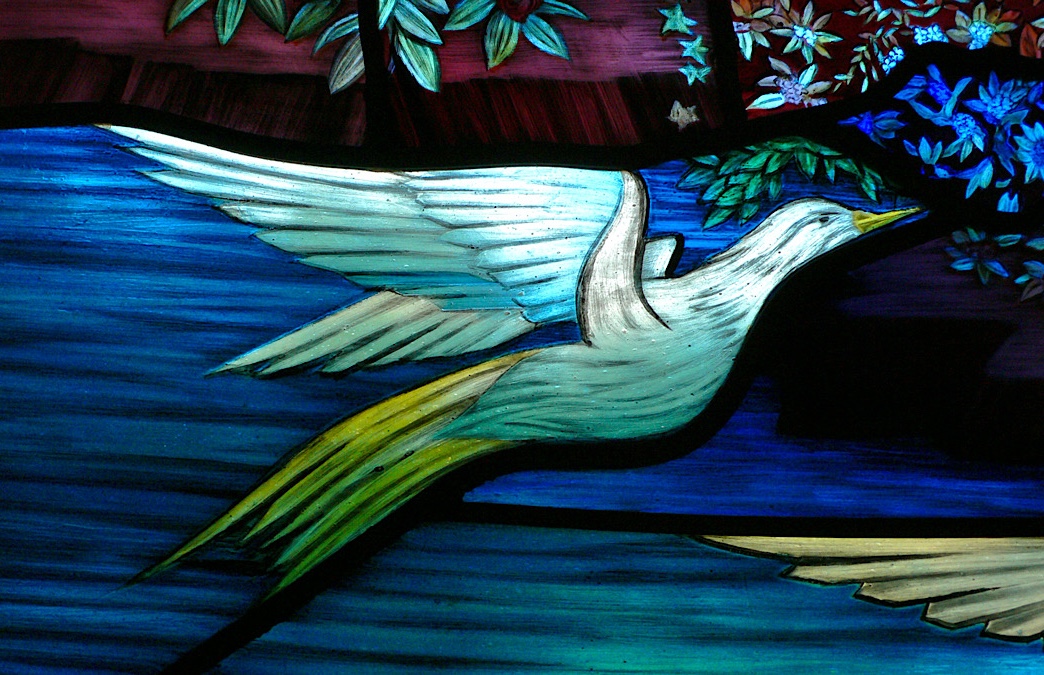
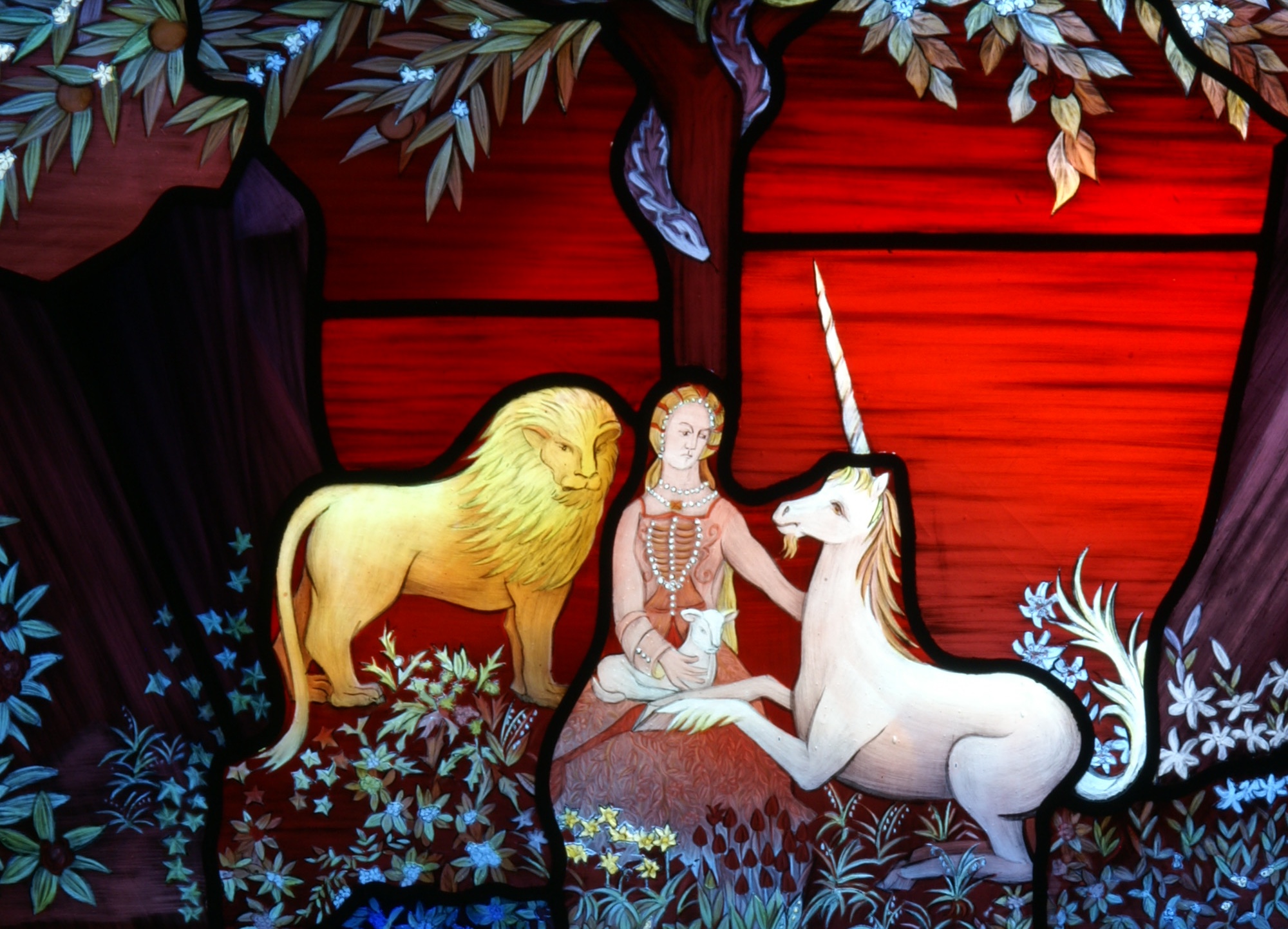
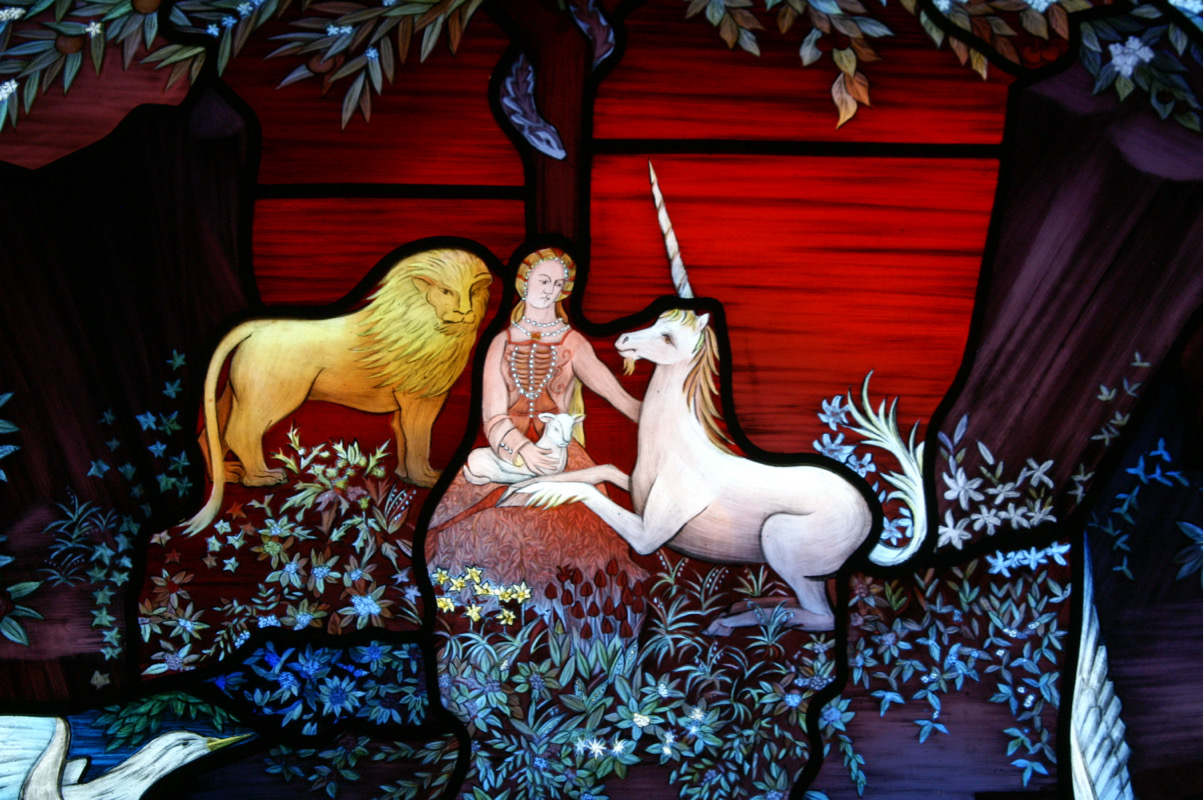
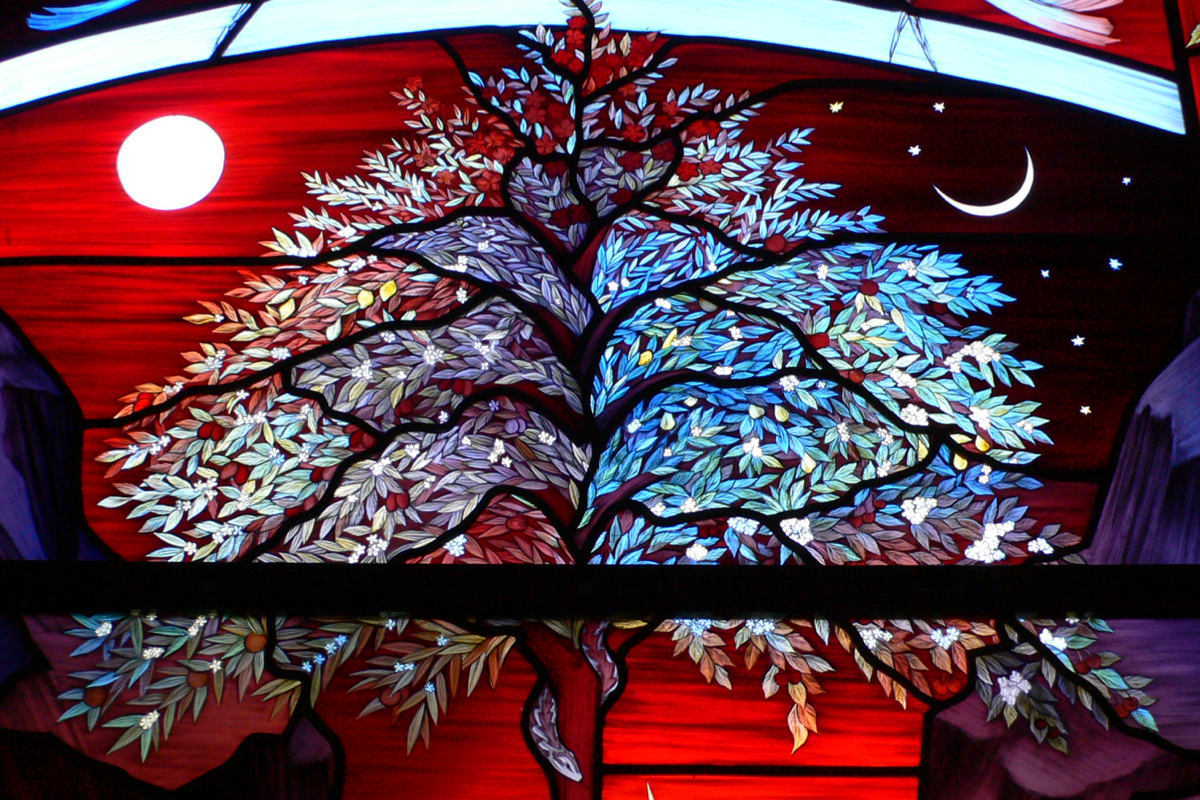
The middle register is Paradise — in medieval thought, an unreachable and enclosed part of this world, an island beyond discovery. Here the Woman sits beneath the Tree of Life with a Lamb in her lap, reaching toward the Unicorn. Behind her shoulder stands the Lion. A Serpent descends from the Tree. Doves cross the water that separates Paradise from Earth. The group rests on a carpet of flowers, as in the tapestry tradition.
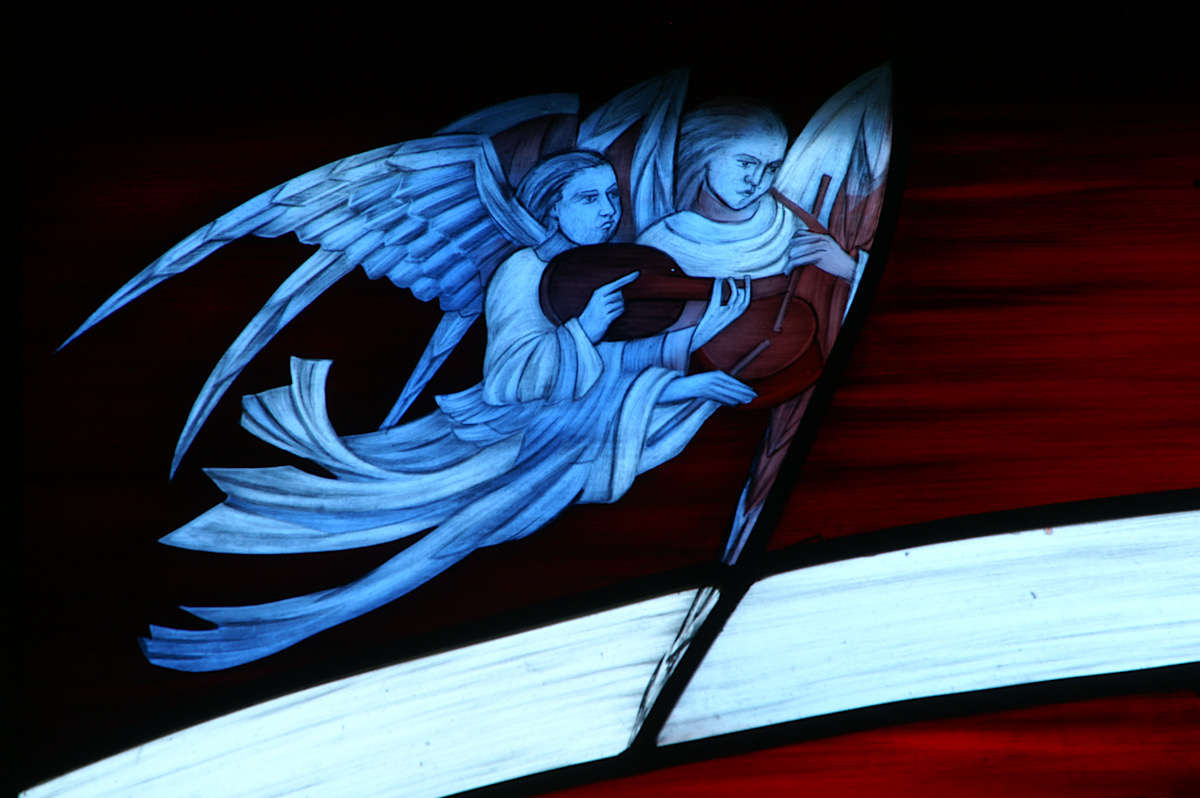
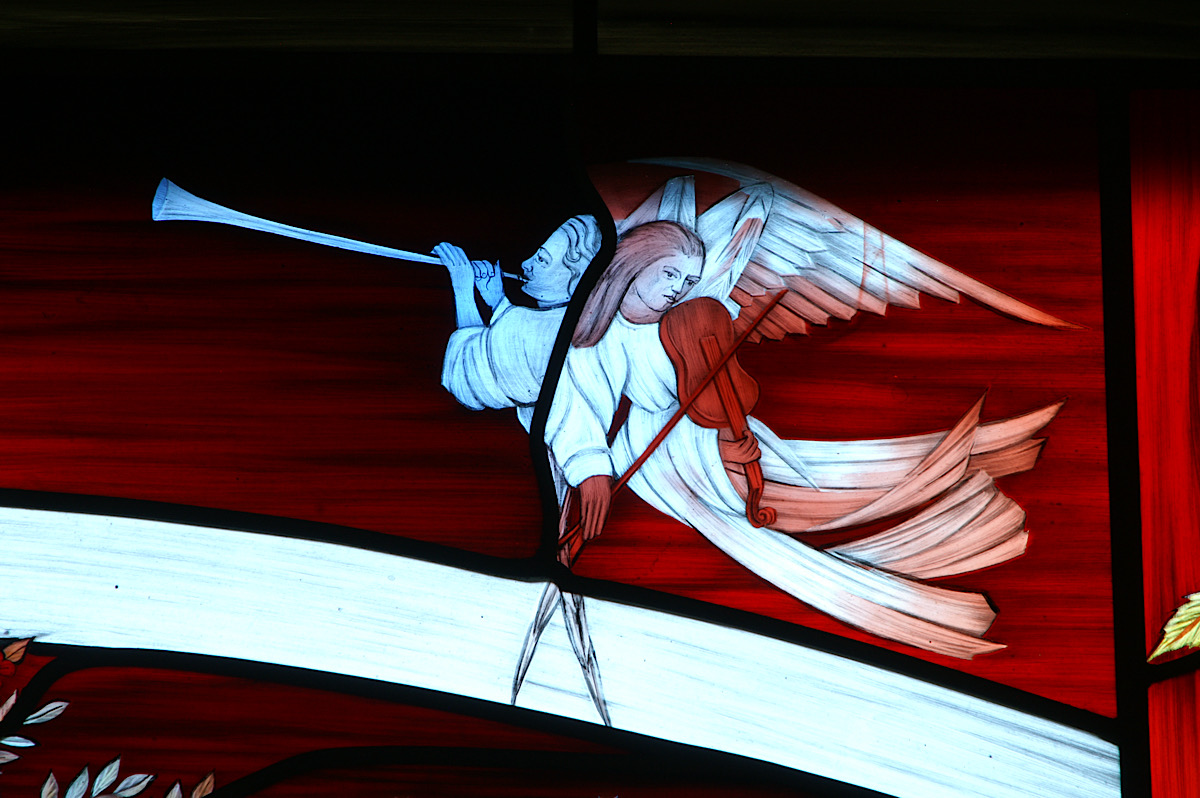
Above, the Firmament — the great vault that in Hebrew thought separates the celestial from the terrestrial waters — divides Paradise from Heaven. The Tree of Life reaches upward and makes tentative contact with the realm above. In Heaven, Angels drawn from medieval illuminated manuscripts swoop in from either side, playing musical instruments. The sky is red.

End of the Age of Innocence
Symbolism
The symbolic programme of the window draws on the rich medieval tradition in which every element carries meaning.
The Unicorn is a lunar, feminine symbol — chastity, purity, and incorruptibility. The Lion is its solar counterpart — masculine, powerful, guardian of the Tree of Life. Together they represent the pairs of opposites, held in equilibrium. The presence of both the sun and the moon in the window underlines this duality.
The Lamb in the woman's lap signifies gentleness and innocence. The Serpent descending from the Tree of Life is here beneficent rather than threatening — associated with the tree, its aspect is regenerative. The Tree itself, bearing twelve fruits and yielding fruit every month, is drawn directly from Revelation 22:2 — the tree whose leaves are for the healing of the nations.
The Fountain is the source of the water of life. The Firmament divides heaven from earth. The Angels are messengers — the Greek word angelos means simply messenger — depicted here with musical instruments and lilies. The Birds link Paradise with our world, representing the human desire to transcend the physical and reach toward the angelic.
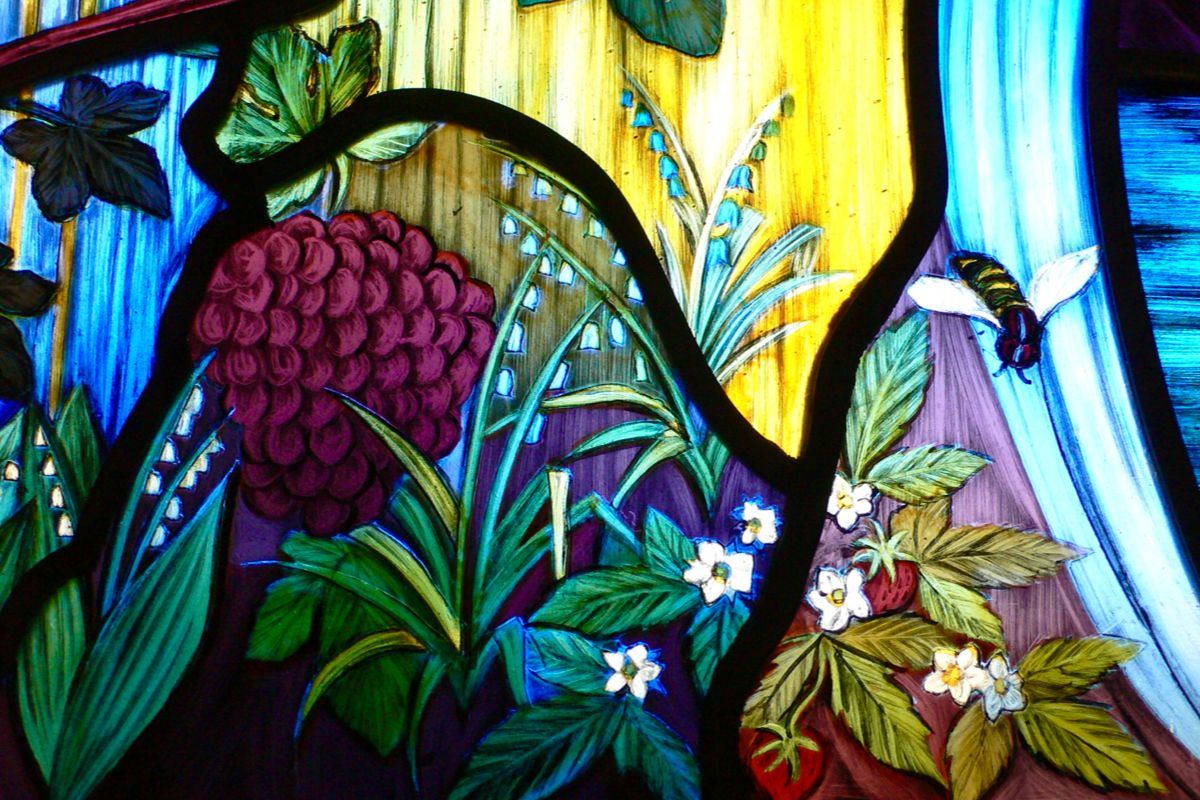
The border carries violets, dogwood, and strawberries; at the base, water-plants and fish. Wheat and grapes, traditional medieval symbols, are present throughout. A robin and a kingfisher, a frog on a lily pad, lily of the valley and strawberries complete the carpet of the natural world. Bees — significant to the commissioner — are woven into the border. At the base, two dragons derive from a carved feature on the staircase of the house itself.
Conclusion
This is among the most technically complex windows the artist has made, executed entirely in traditional techniques.
The glass is mouth-blown flashed glass — a thin layer of colour bonded to a thicker base, typically of clear glass — which can be selectively removed using acid etching. Many of the sheets used in this window are unique. The glass was etched repeatedly to build up the layered, multi-faceted quality visible throughout the work.
Traditional black glass paint was applied across the entire window to create halftones and painted line, then fired at 650°C to fuse permanently to the surface. Yellow tones were achieved through silver staining — an ancient technique in which a silver compound is painted onto the glass and fired, transforming the glass itself from within. When all painting and etching processes were complete, the pieces were leaded together into the finished panels.