
Hirschberg-Leuternhausen — Ehemalige Synagoge
Near Heidelberg, Baden-Württemberg
Two circular windows for a former synagogue, unused since the Second World War, marking the completion of its restoration and its new life as a concert and gathering space. Small in scale — this is the most historically charged German commission in the whole practice, and one of the most quietly radical decisions I have made in any project.
I was given a free hand to decide the direction of the designs, subject to the approval of the committee now responsible for the building.

Two Windows, Two Directions

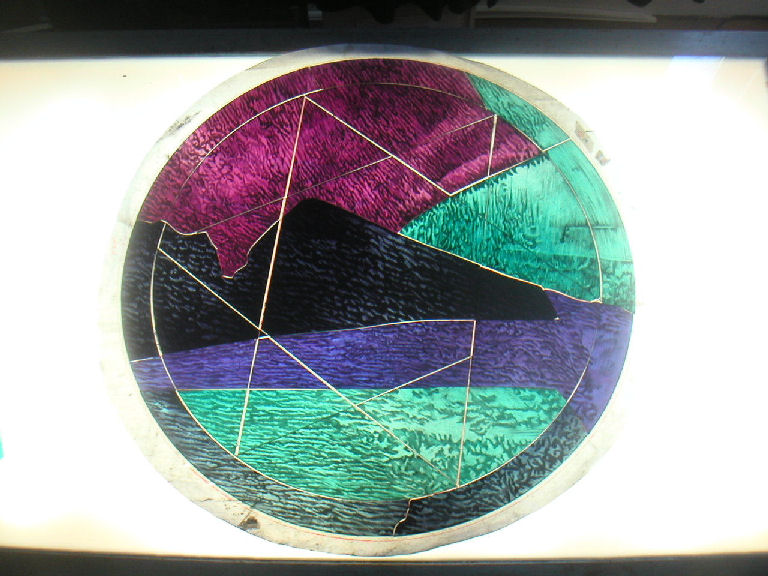
The West window — the past, compressed toward a dark centre
The Past and A Way Forward
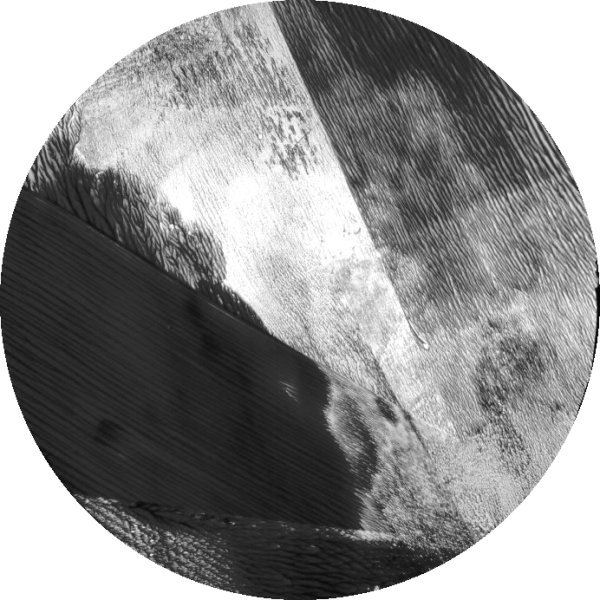
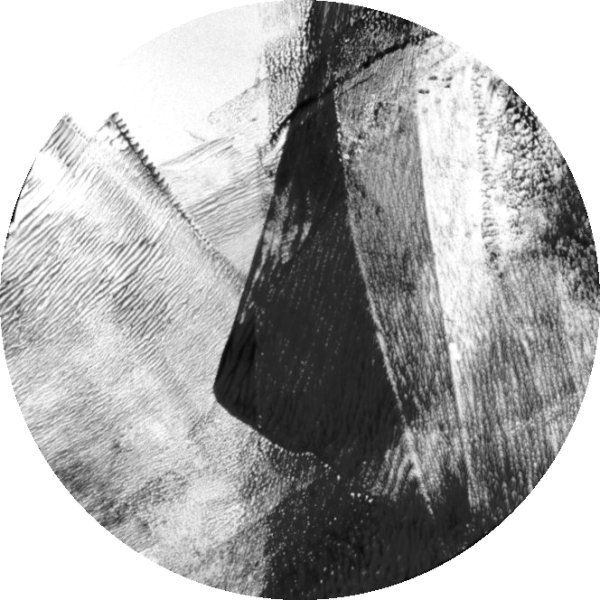
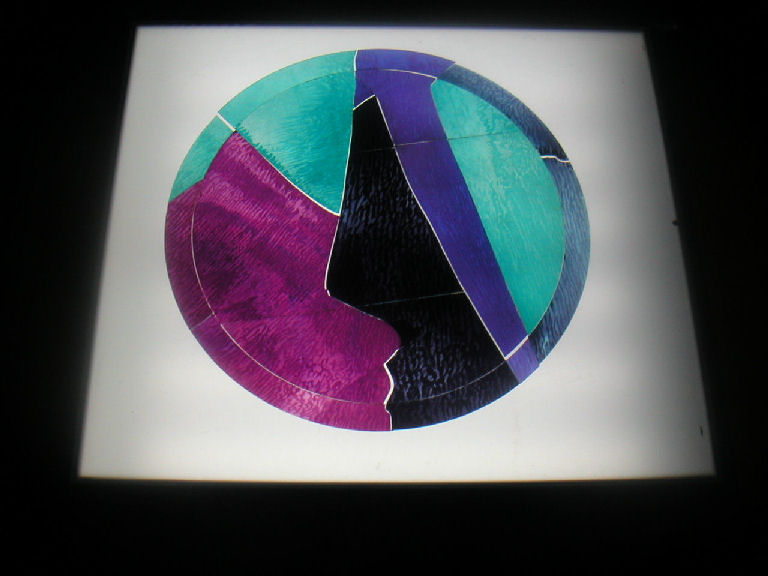
I decided an abstract approach would be most appropriate for this building, using controlled spontaneity — compositions generated through a random principle over which the only real control is the selection of colours.
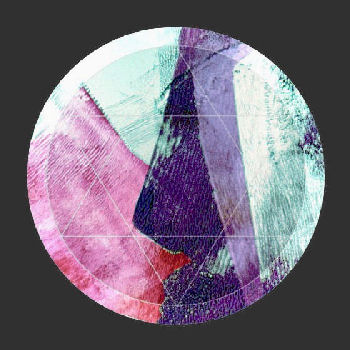
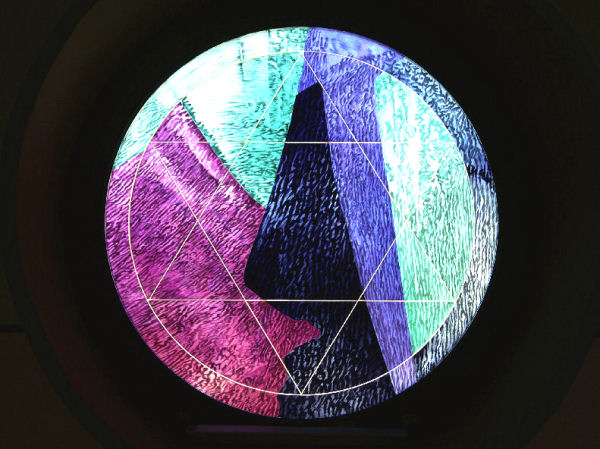
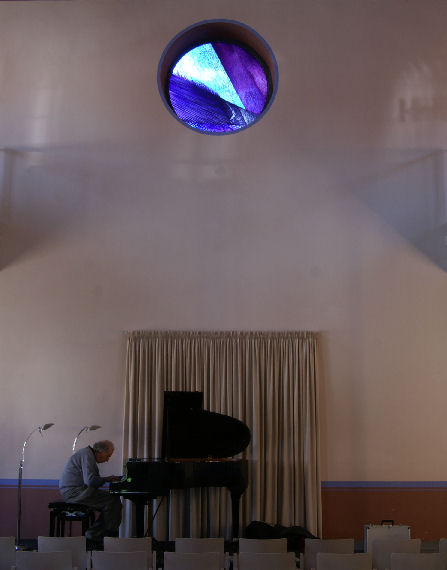
The West window sits behind you as you face the room — the past at your back, carried without always being seen. Its composition has a layered, compressed quality, building toward darkness at the centre, in an old-fashioned palette of pinks, greens, and lilacs — colours with the quality of faded textiles, of old photographs, of things that have aged into beauty.
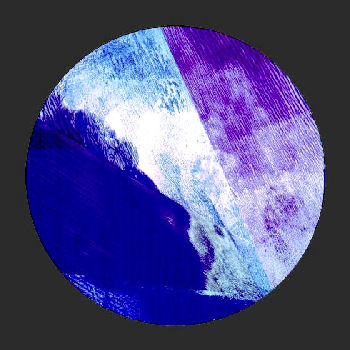
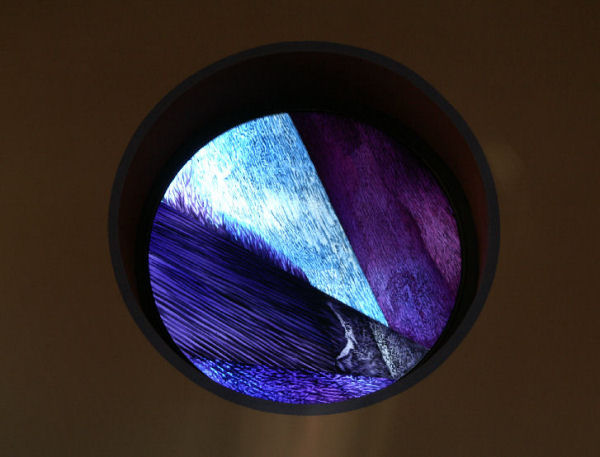
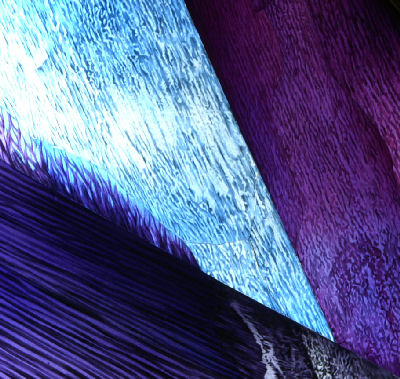
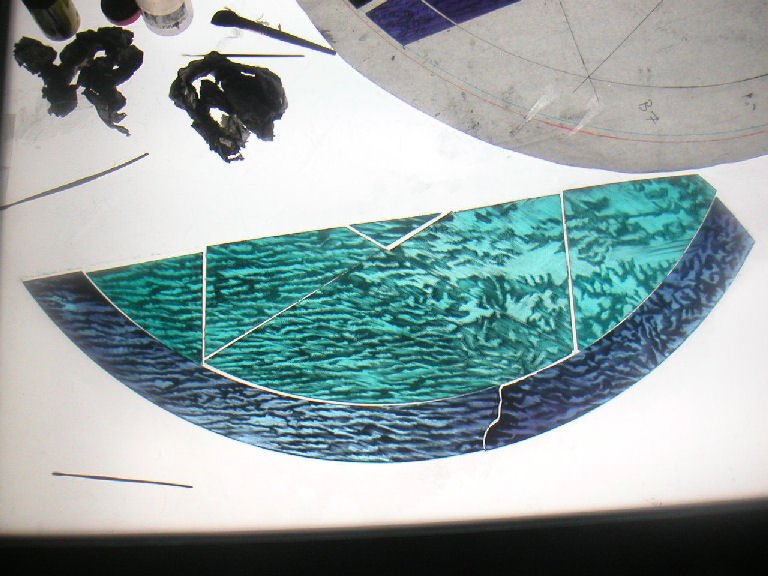
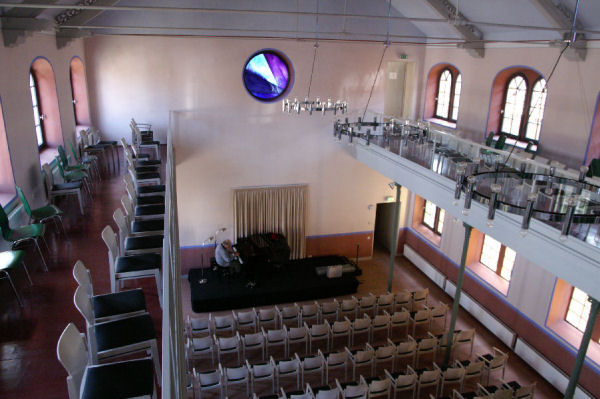
The East window faces the congregation. Where the West window compresses toward dark, the East window opens — darkness dissolving, lightness at the centre, tense and alive in a different way. I considered a symbol for this window too, and decided against it. The opening itself carries the meaning. The future is not yet defined.
Cut, Not Drawn

The Star of David is not painted or leaded — it is the cut line itself, left open
A Symbol Built Into the Structure
I wanted to reference the building's former use as a synagogue, without making a window for an active one. The solution was precise: a Star of David, set within a circle — a device I had used before in the Queens Park Synagogue Shabbat triptych, where the star was the steel construction frame of the window itself.
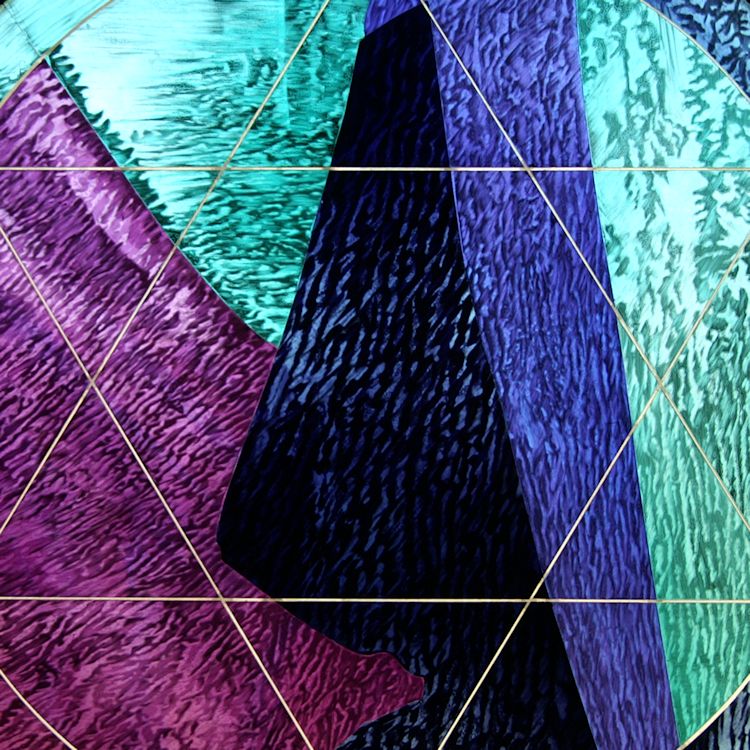
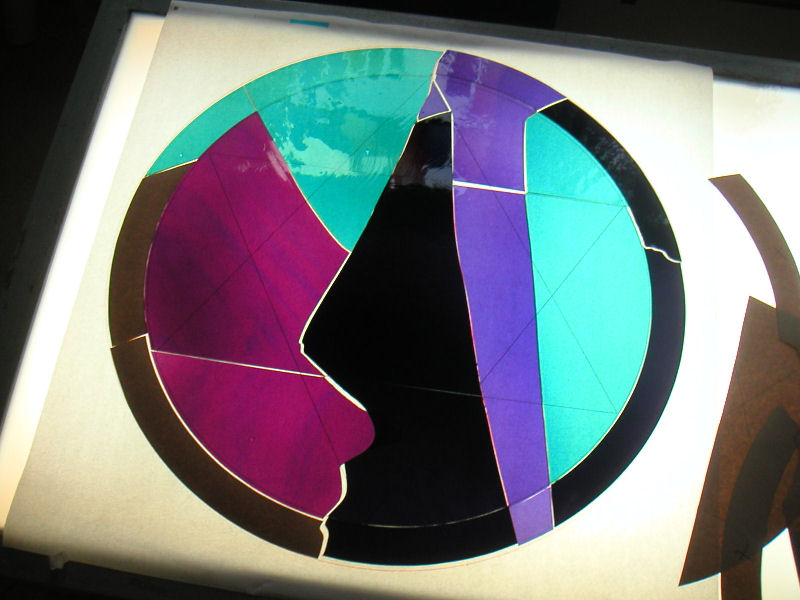
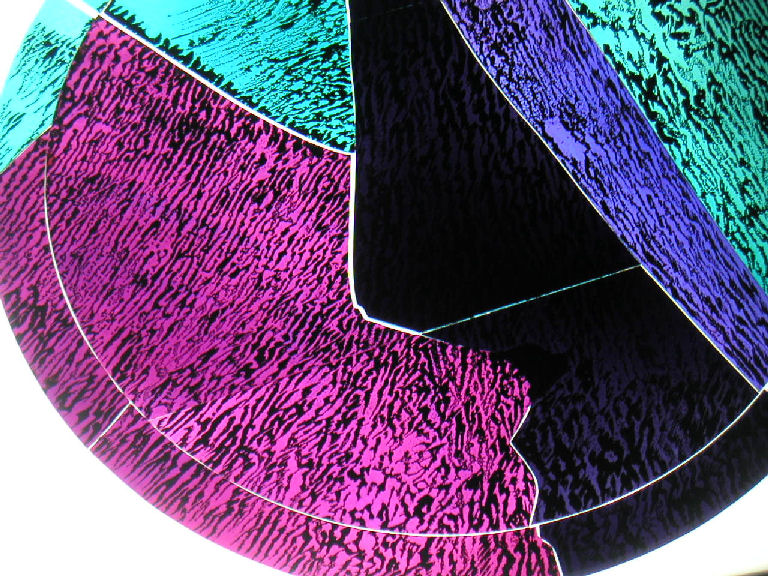
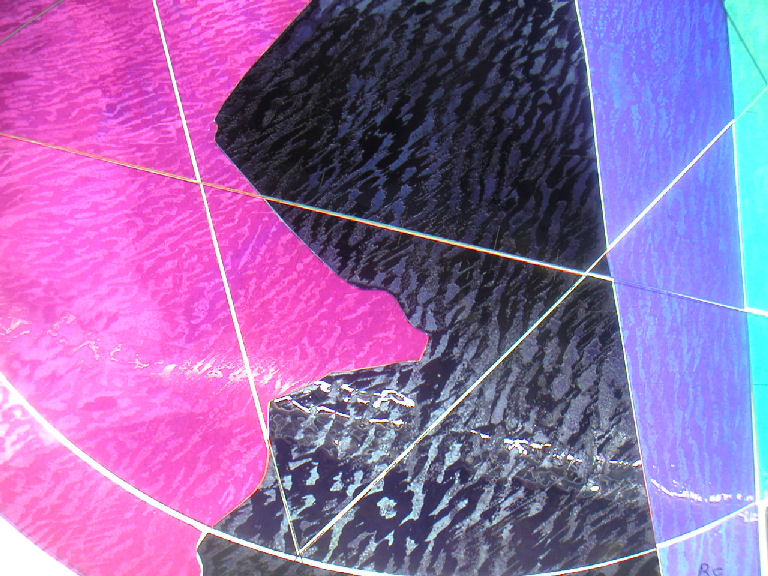
Here it is set within an abstract composition, and made in an entirely different way. Instead of a lead line, which would read black and dominant, I used the 3mm cut line itself as the star. In traditional leaded glass that gap is filled with lead came and reads dark. Here, with the pieces fixed to a base sheet with silicone rather than leaded into came, the cut lines remain open — the edge of the cut glass catching the light as a luminous white trace.
The star is not drawn onto the glass. It is cut into it. Present and not present simultaneously, depending on the light and where you stand. This was exactly the quality I wanted to achieve. Like a memory.
Panic, Then Understanding

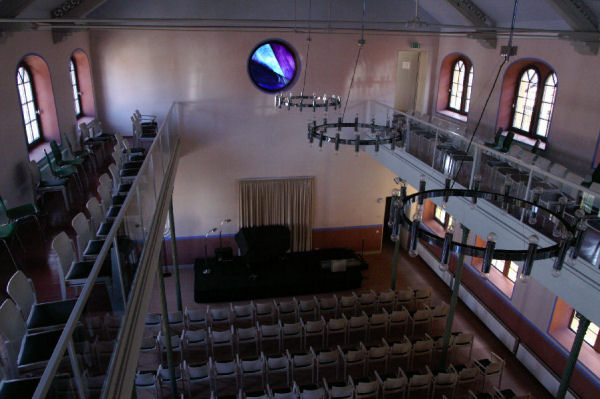
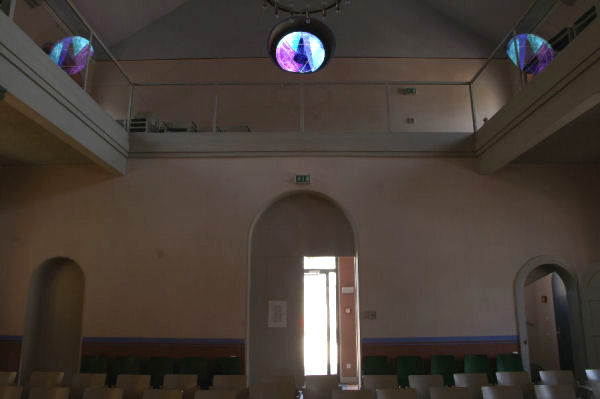
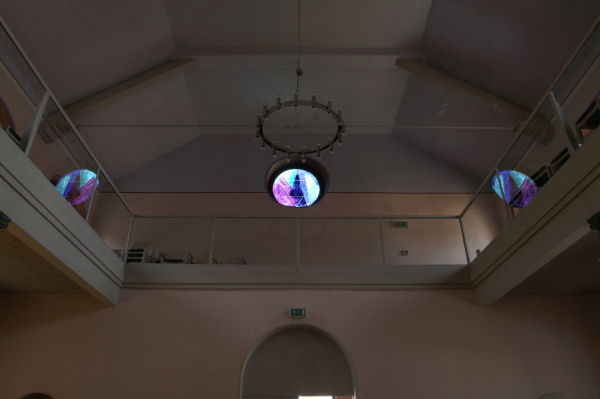
Both windows visible from the gallery, the chandelier hanging in front of the West window
What the Committee Understood
When I introduced the Star of David into the West window design, the committee reacted with real alarm. The symbol read to them as too assertive — a Jewish symbol placed boldly in a building no longer a synagogue, in a country carrying the full weight of what happened to that community.
Then they understood what I had actually done. Not a Star of David asserting presence — a star that almost isn't there. A white cut line that fades in and out of its background like a memory that is still present but no longer has a home. The community honoured without being imposed upon. The history present without being declared.
"As usual with my work, people don't get it — at first."
From the gallery level the West window reads simply as colour and form, the star invisible at that distance. Only on approach does it resolve. Beautiful from far. Meaningful from near.
Four Weeks to Find It

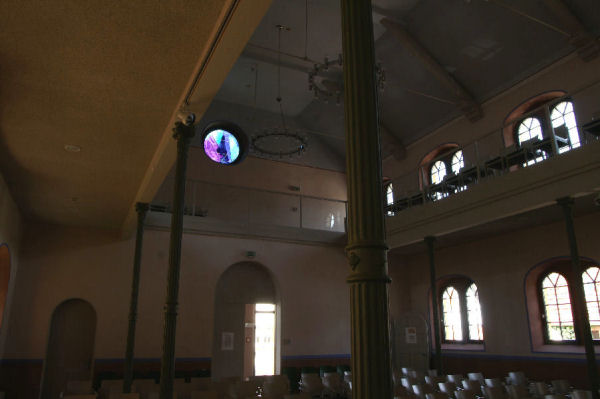
The building today — restored, and in active use as a concert and gathering space
Controlled Spontaneity, Applied
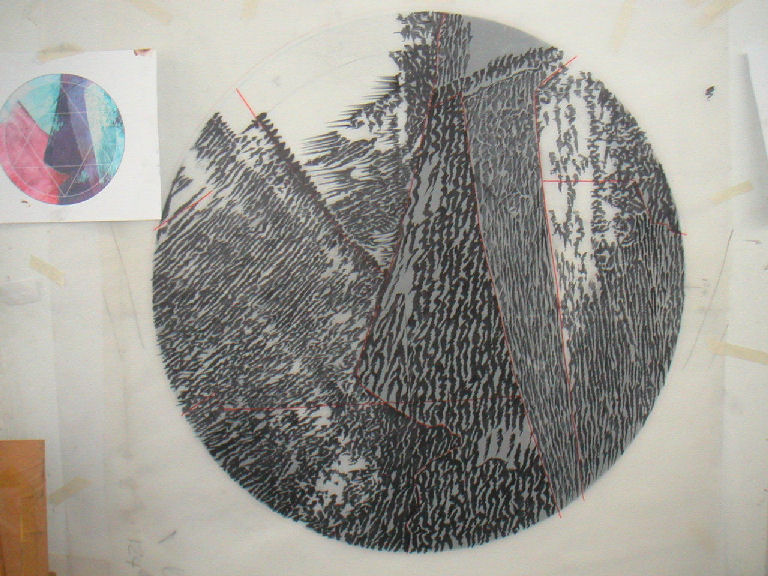
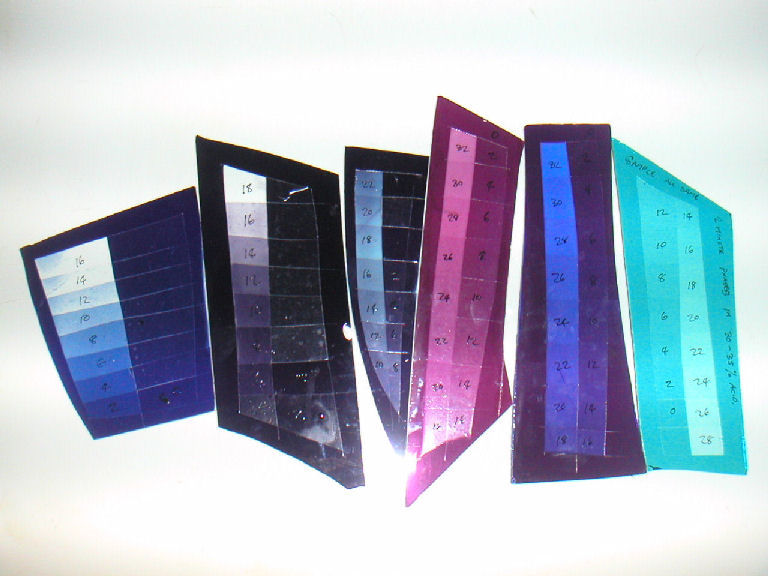
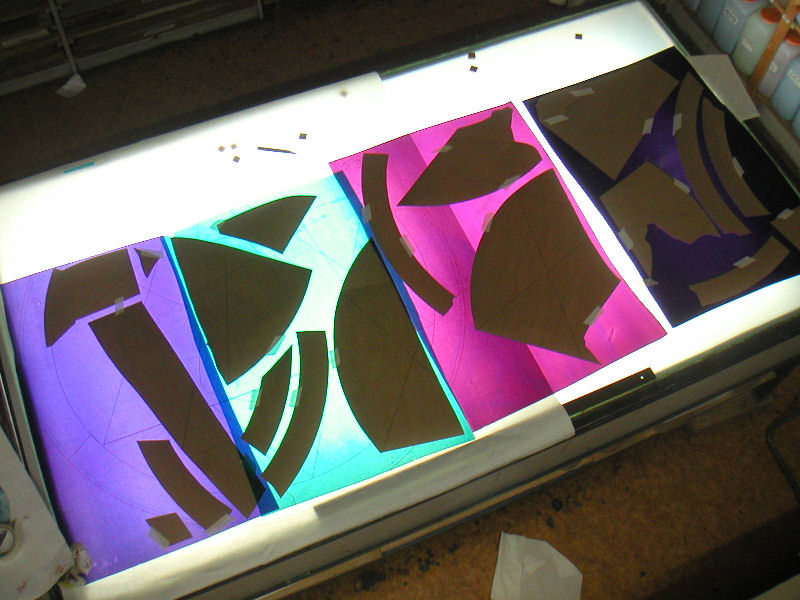
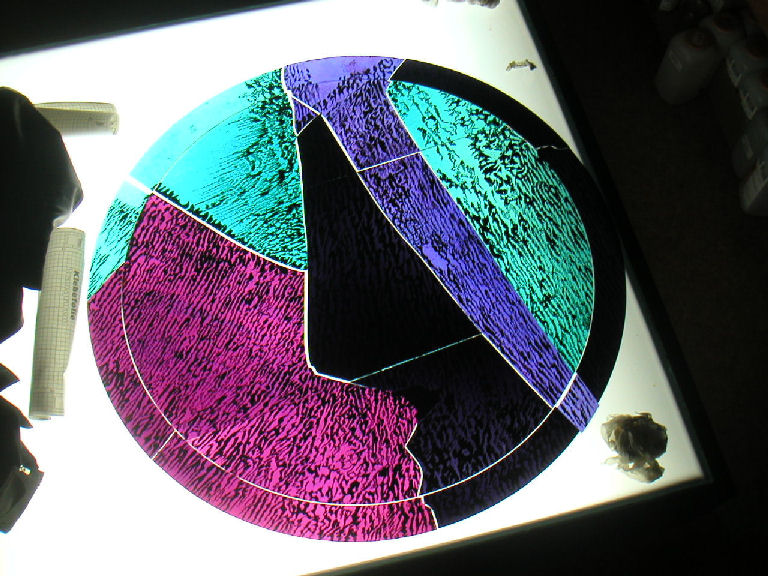
The large-scale drawings I made from the controlled spontaneity compositions were exciting, but lacked the directness and freshness of the originals. It took four weeks of experimenting with acid resists to find a way of etching the glass that kept that same quality.
Each window was extensively and repeatedly etched, the surface worked again and again to build tonal depth. No paint or enamels were used to enhance colour — only the inherent colour of the flashed glass, revealed and modulated by the acid. Traditional black glass paint was used only minimally, for line and form where essential.
I now regard silicone with some frustration as a fixative material — but at the time it was the best available method, and it was precisely the silicone, replacing the lead came, that let the cut lines stay white rather than turning dark. The technical limitation of the moment became the conceptual strength of the work. The disliked material is what made the white star possible.
Die Herstellung der Fenster
Questions and Answers
Why is a Star of David hidden rather than shown clearly?
The building is no longer an active synagogue, so a bold, declarative Jewish symbol would have been the wrong choice — assertive in a way this space no longer calls for. But the building's history still deserves to be honoured. A symbol that reveals itself only on approach lets the history be present without being imposed on everyone who simply walks into the room.
How is the star actually made?
It is the cut line between pieces of glass, left open rather than filled with lead came. Because the panels are fixed to a base sheet with silicone instead of being traditionally leaded, that 3mm gap stays clear — the edge of the cut glass catches light and reads as a fine white line, tracing the six-pointed shape across the composition.
Why does the East window have no symbol at all?
The West window looks backward and carries the weight of memory, so a symbol belonged there. The East window looks toward what the building becomes next — and I felt a symbol there would have pre-decided something that isn't mine to decide. The openness of the composition itself is the statement.
What is the building used for today?
It has been restored and is now in active use as a concert and gathering space — the windows were made specifically to mark that completed restoration and change of use.