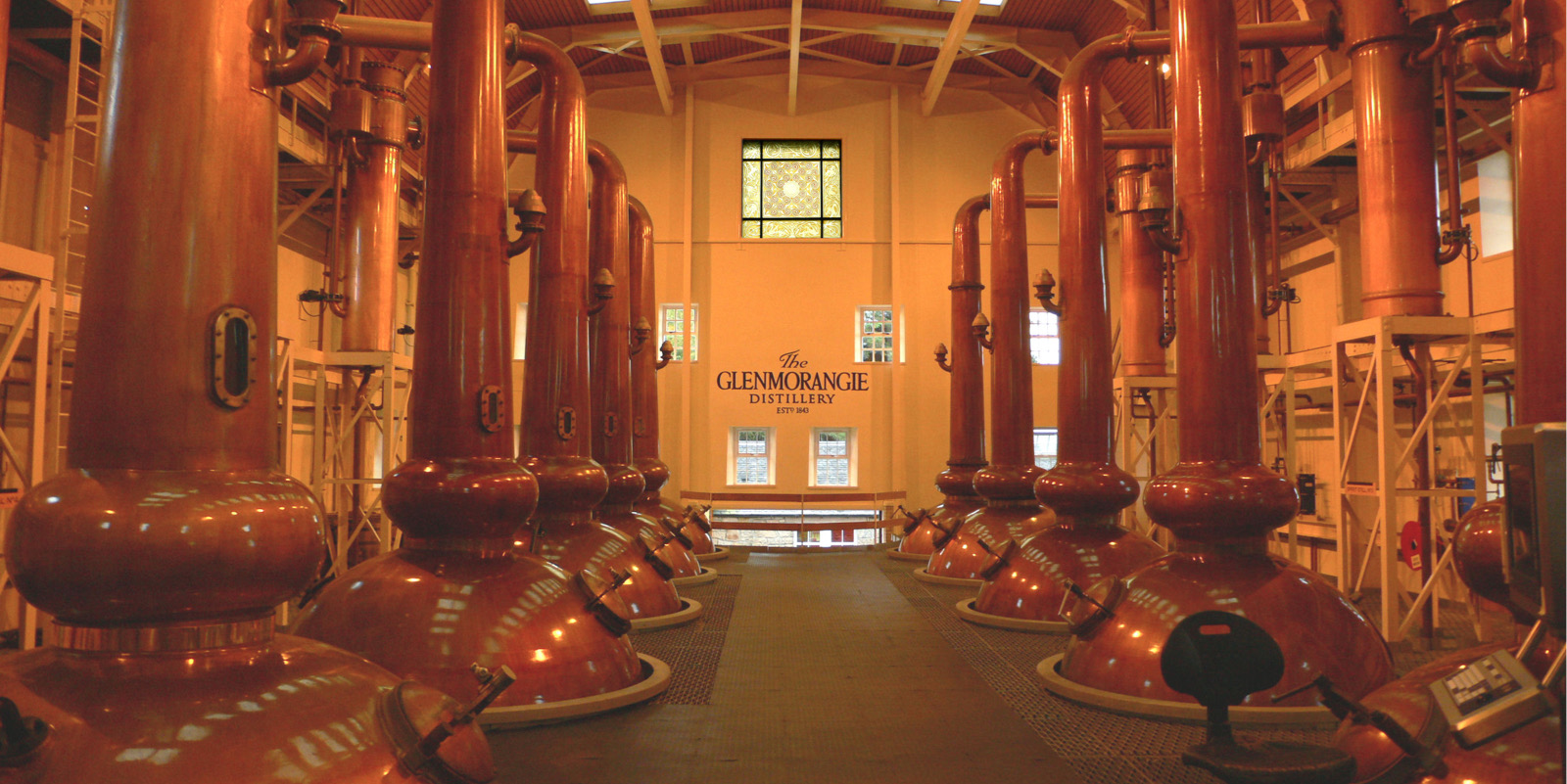
Glenmorangie Stillhouse Window
Tain, Scotland • fused Bullseye glass artwork
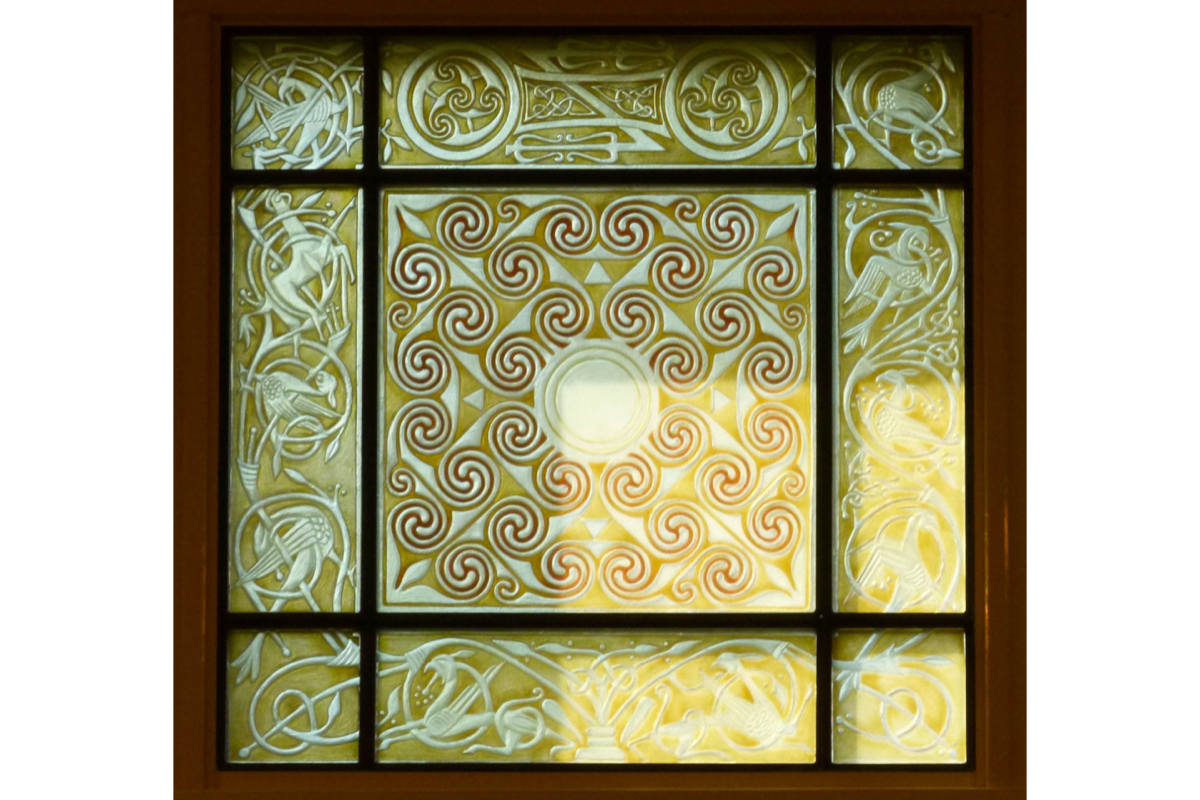
The Still House at Glenmorangie Distillery a window opening was created high on the north wall of the stillroom to house this commissioned window
The Project
The Glenmorangie Window was created for the Still House at Glenmorangie Distillery in Tain, Scotland. The project began as an invited competition where several glass artists were asked to present concepts for a new window.
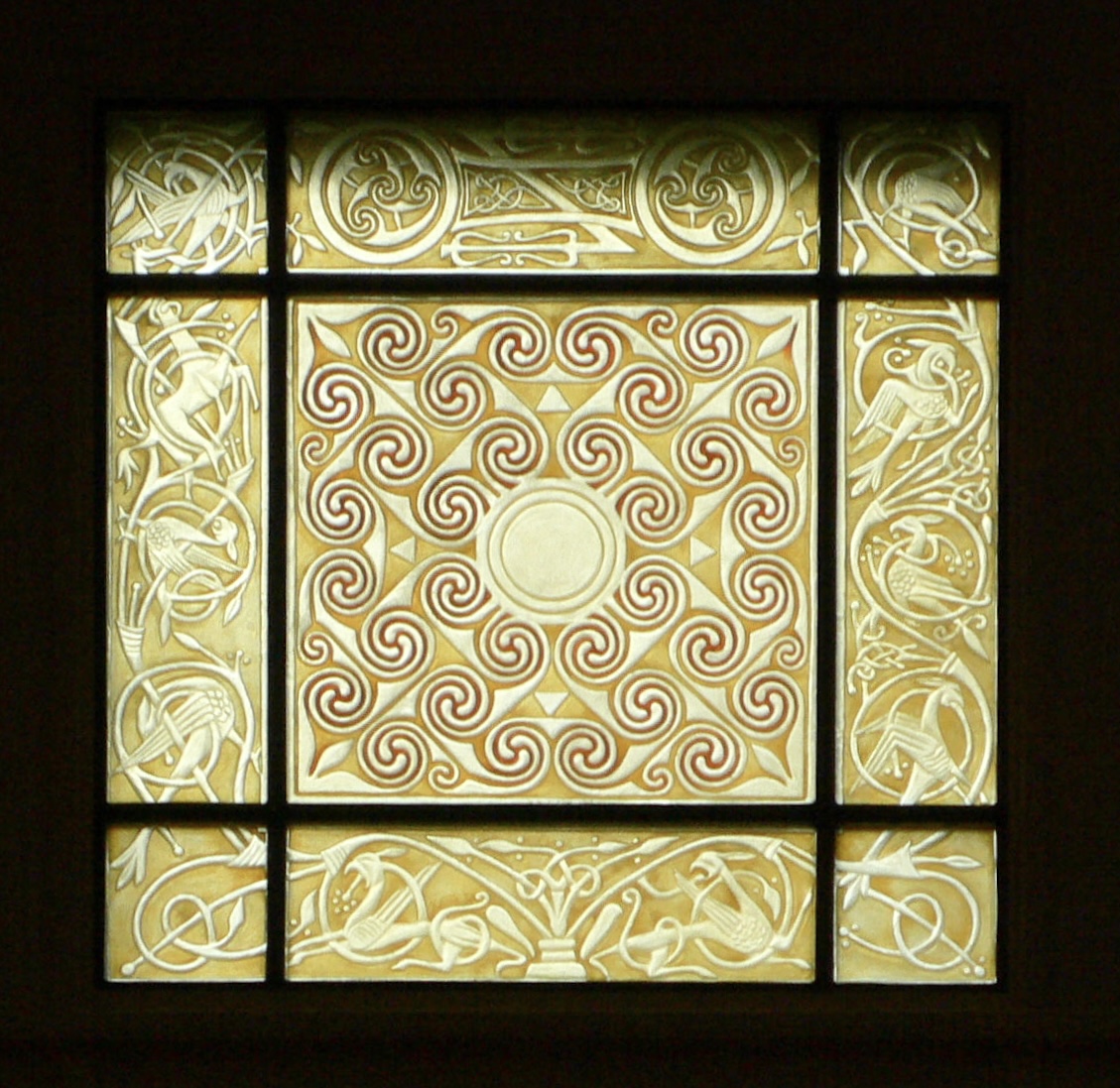
The theme was to be based on Glenmorangie’s signet, which is derived from the historic Hilton of Cadboll Pictish stone. Instead of a traditional flat window, I chose to create a relief sculpture in glass, reflecting the carved nature of the original stone.
Research & Inspiration
I visited the distillery and met sculptor Barry Grove, who had created a contemporary interpretation of the Hilton of Cadboll stone. I also studied the original stone at the Museum of Scotland, including recently uncovered base sections. These visits greatly influenced the final design.
Glenmorangie Still House Window
Tain, Scotland • 2010
Design Development
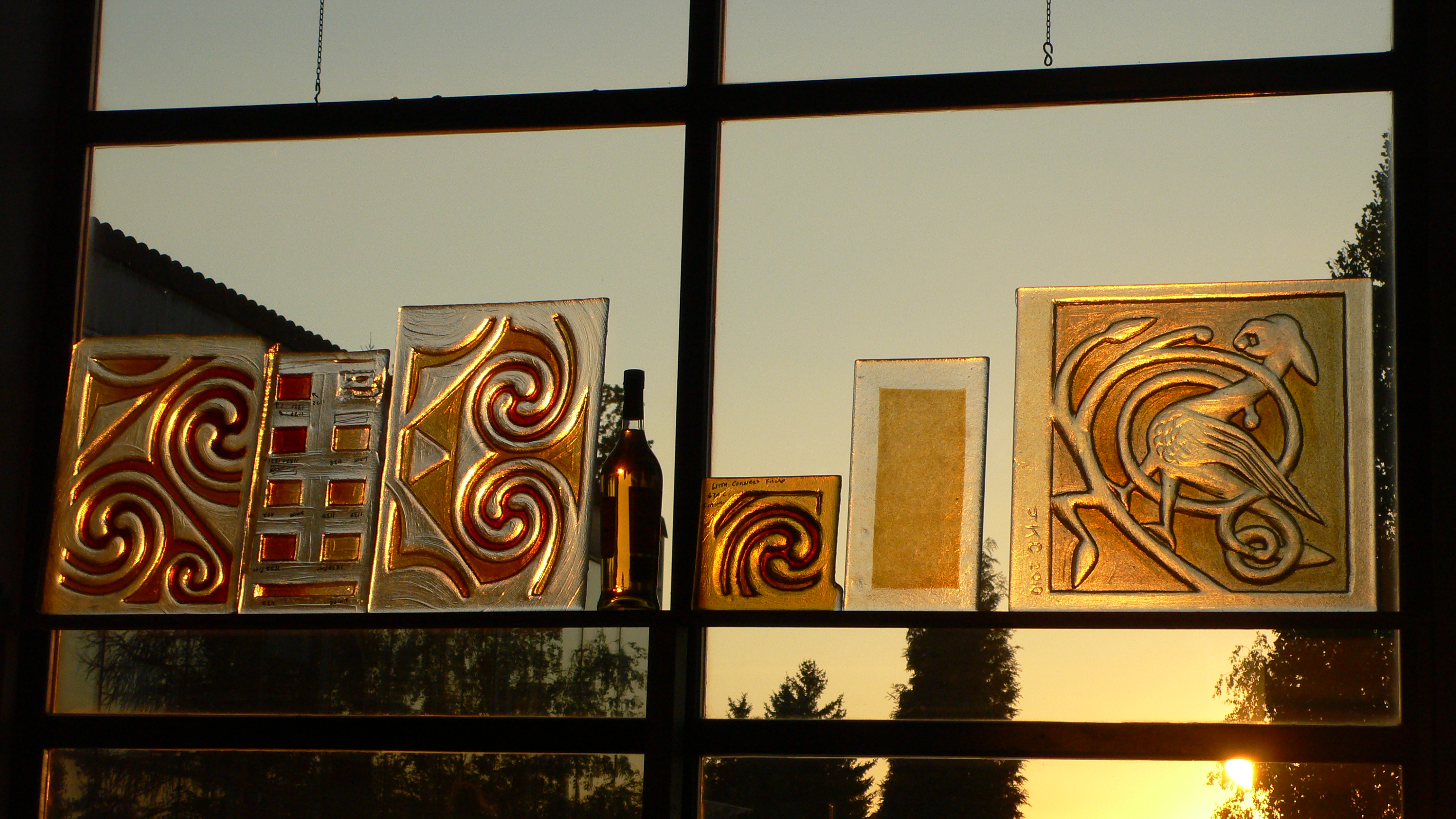
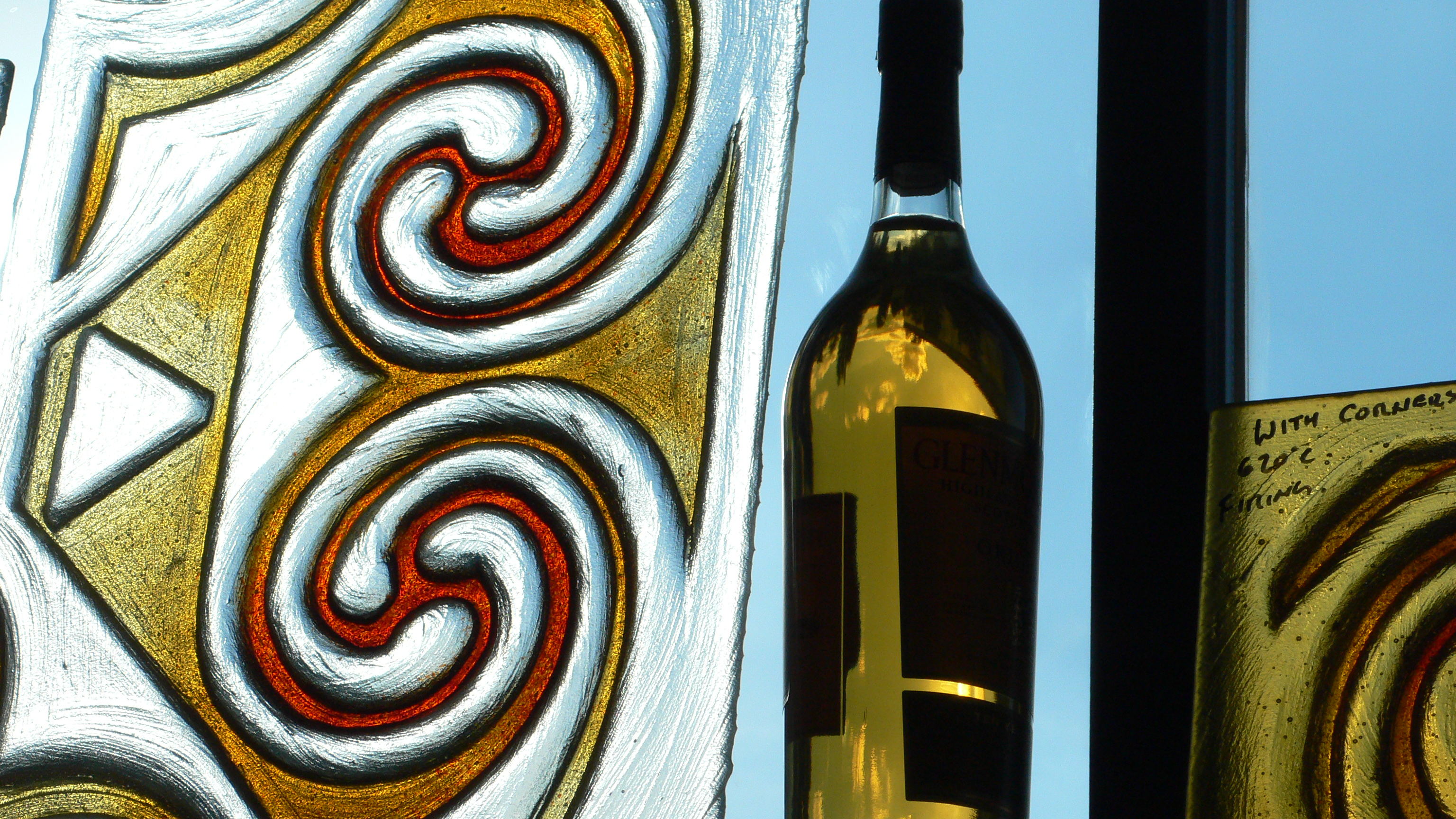
The initial concept used slumped float glass for its beautiful silvery quality. After acceptance, Glenmorangie requested the incorporation of whisky-inspired colours. This led to extensive experimentation with glass fusing techniques using compatible Bullseye glass.
Making Process
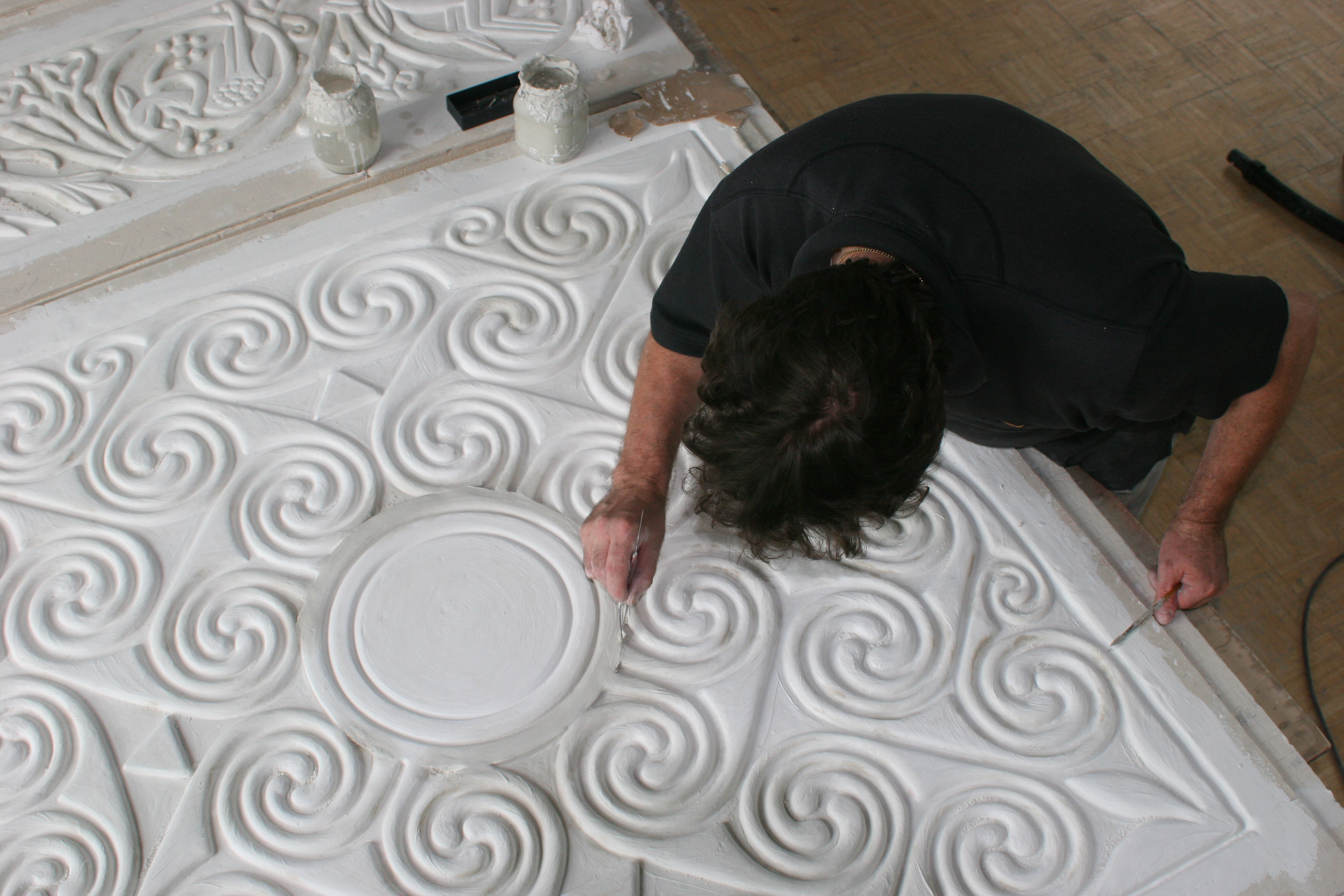
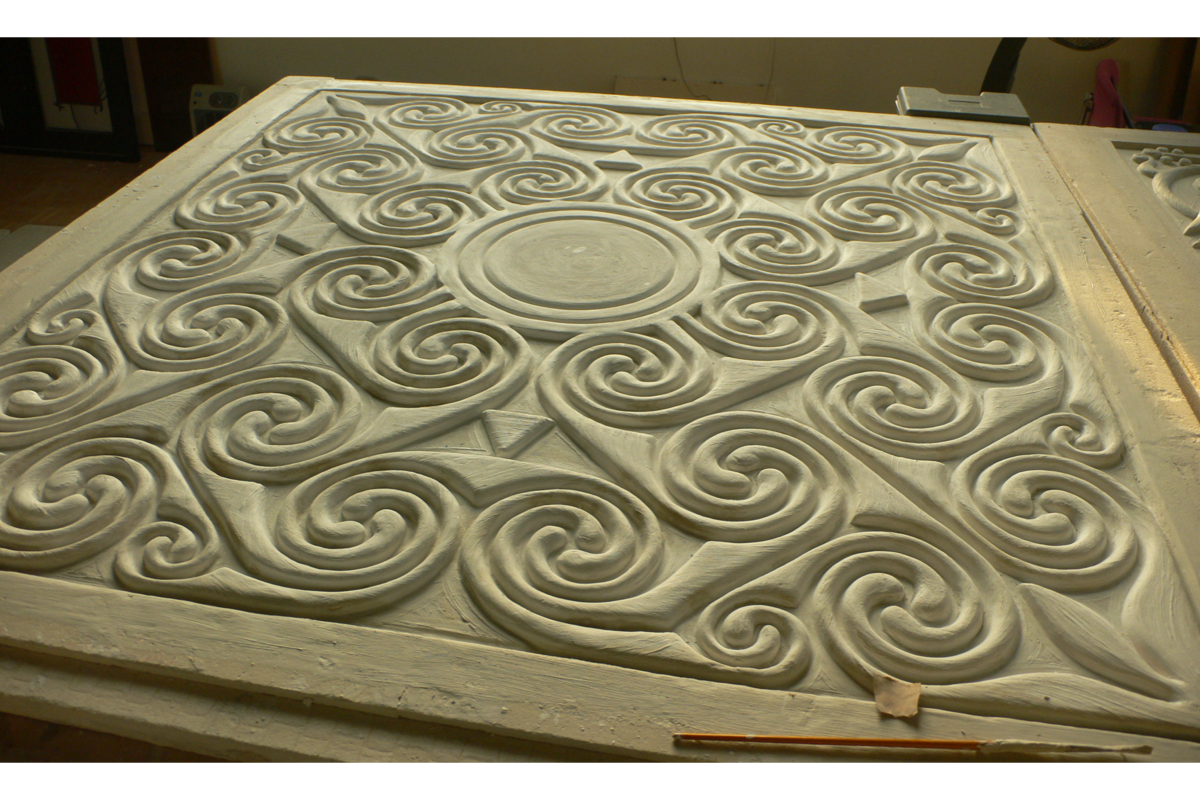
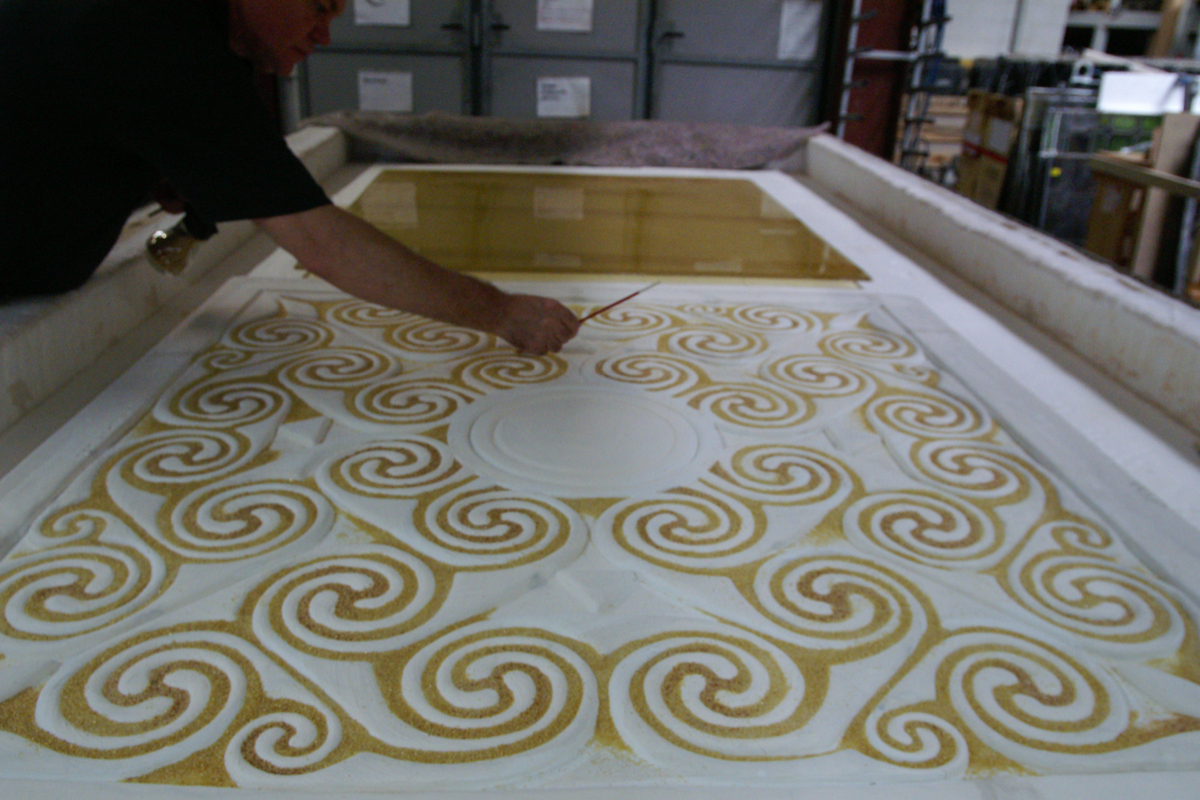
The window consists of nine panels, the largest measuring approximately 1.35 metres square. Each panel was created through a complex process:
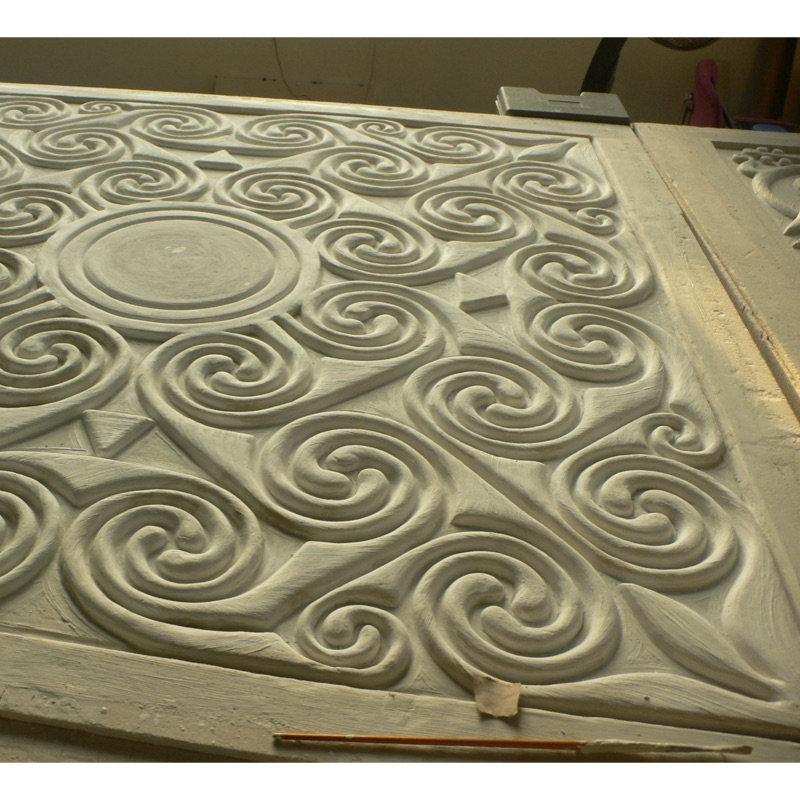
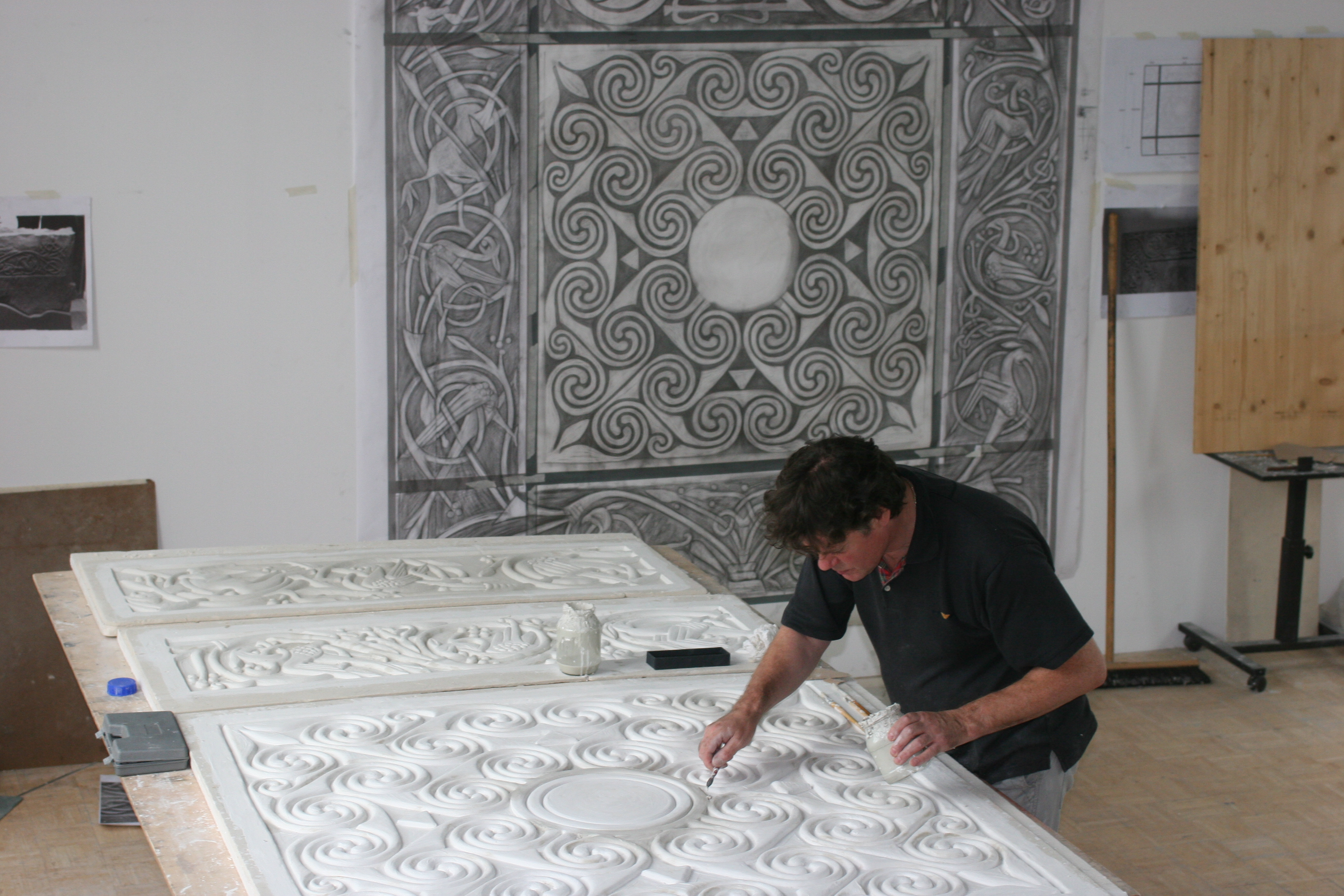
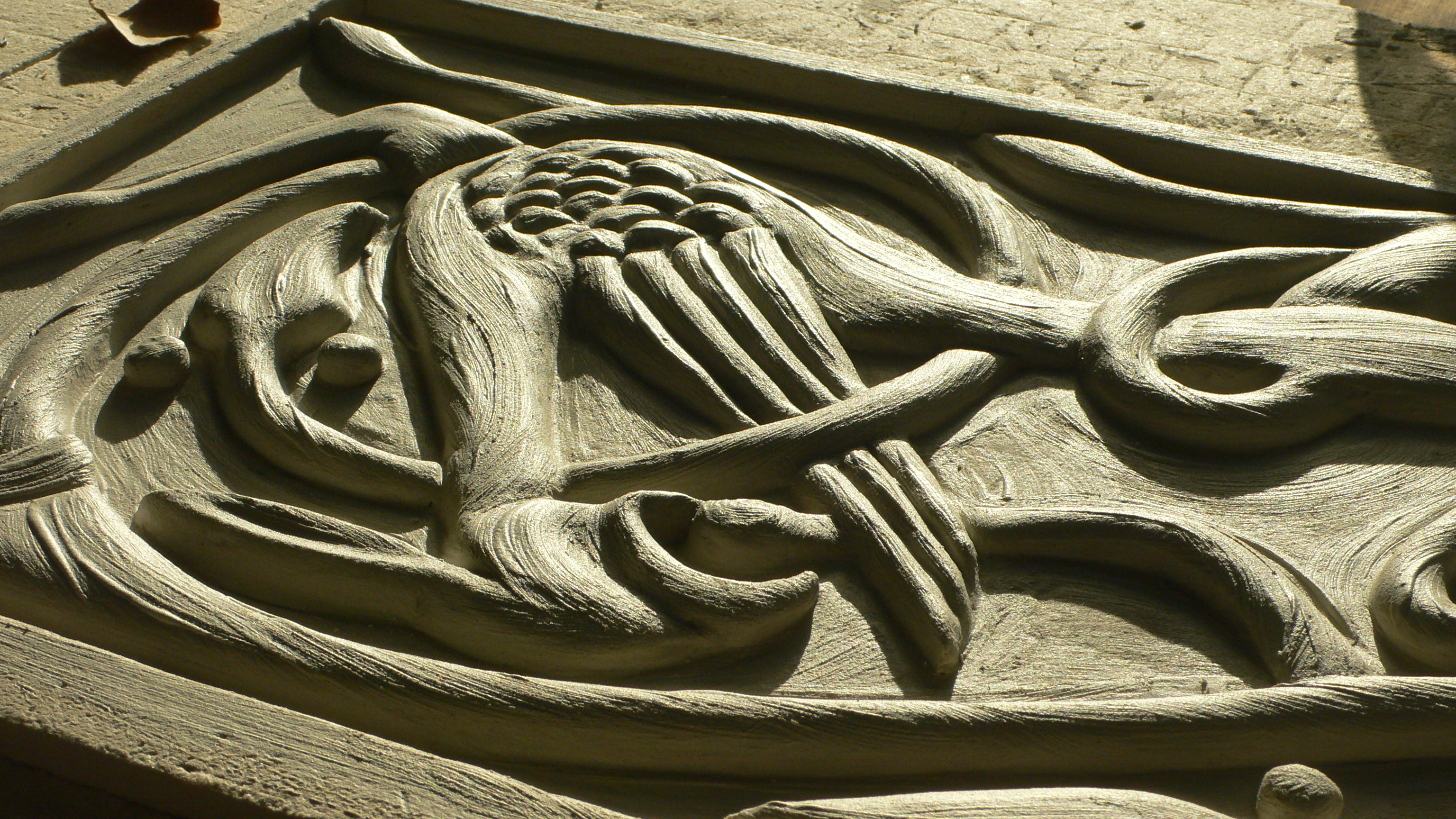
- Hand-crafted high-temperature relief forms
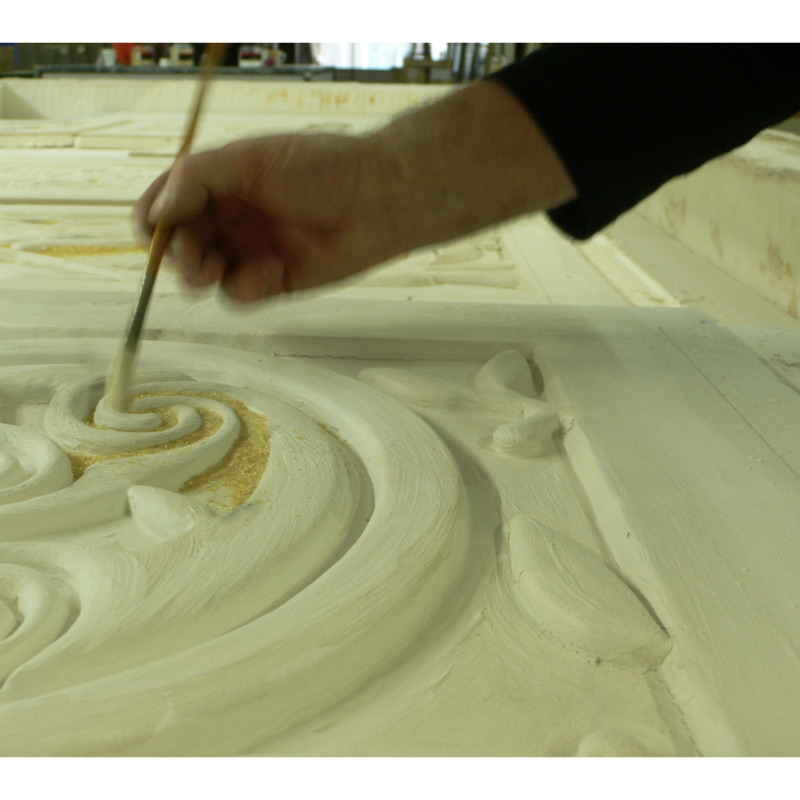
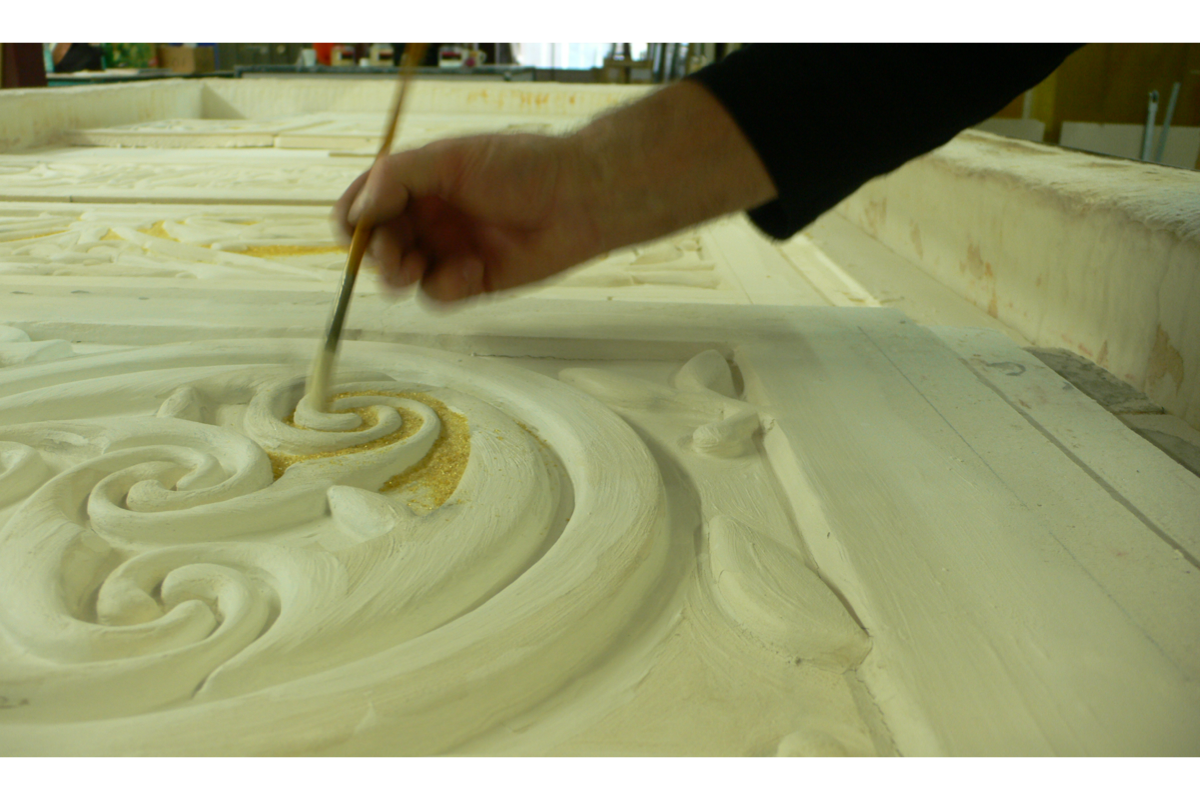
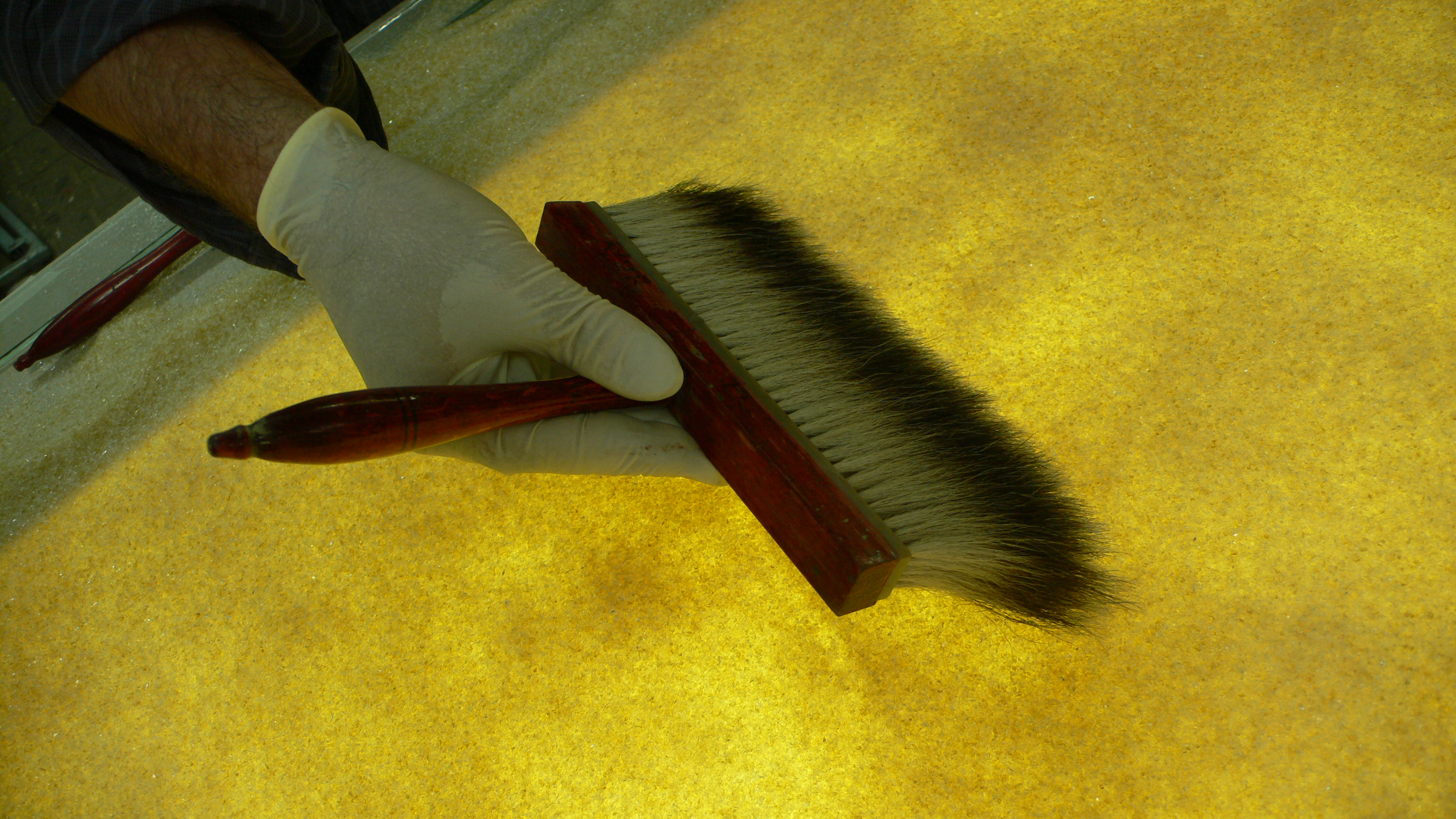
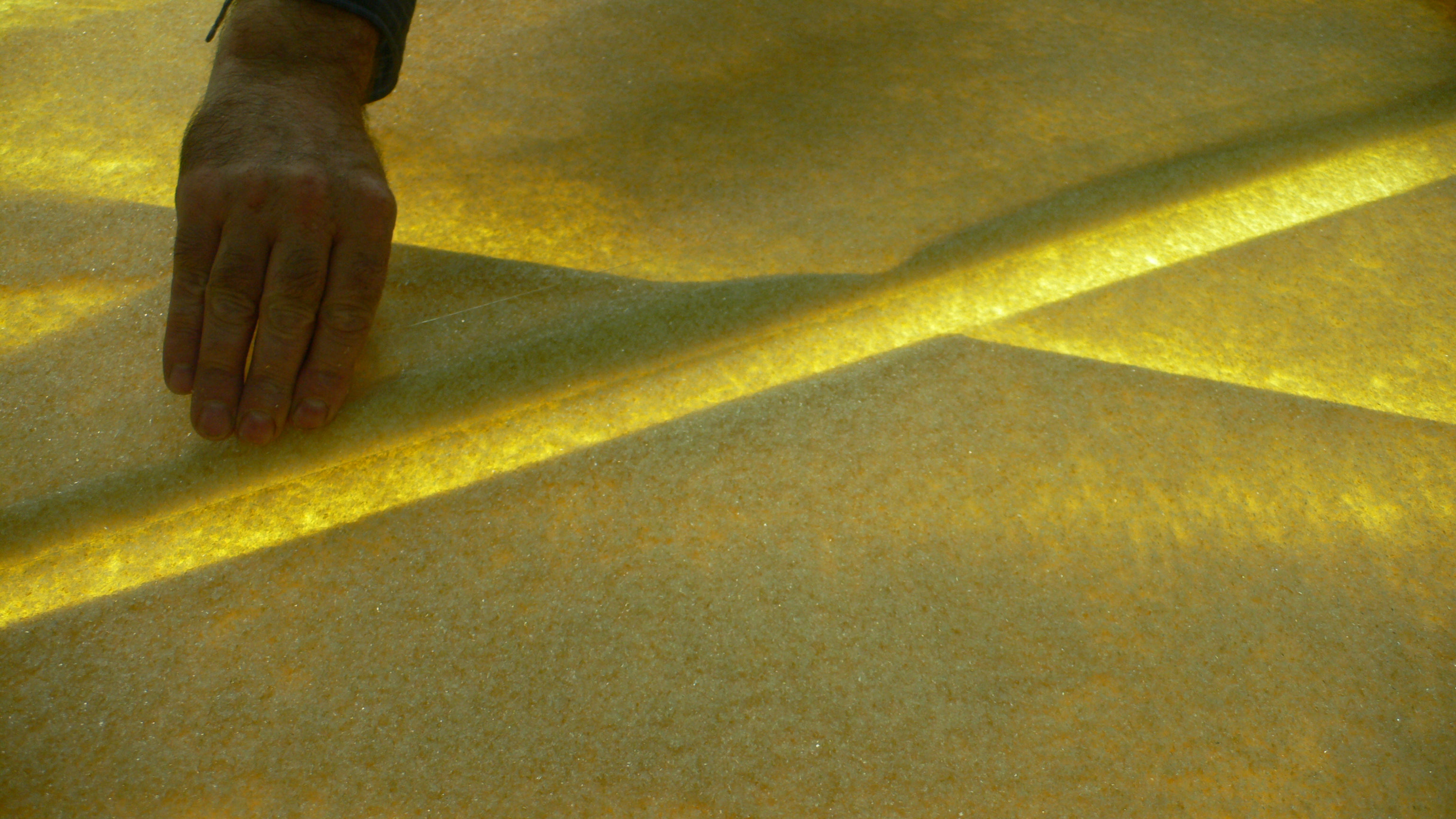
- Layering of clear and coloured Bullseye glass frit
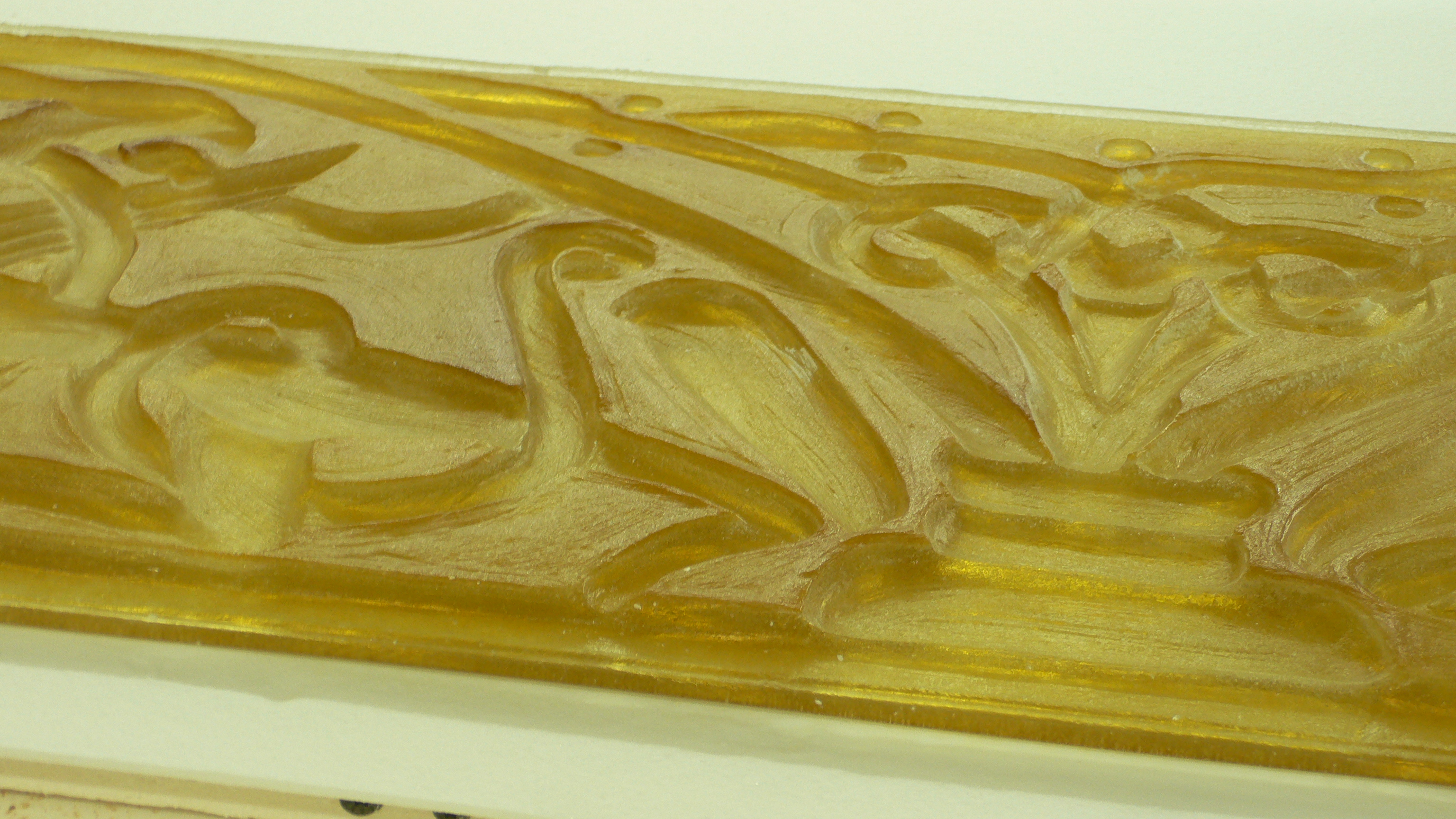
- Fusing at temperatures over 800°C with carefully controlled heating and cooling cycles (approx. 18 hours)
The firing process destroys the forms, making each panel unique. The largest central panel weighs around 170 kg.
Installation
The completed window was transported from Germany and installed high in the Still House — a space often referred to as "the Cathedral" of the distillery. It sits within a specially manufactured frame.
Final Thoughts
This project marked a significant development in my practice, moving toward sculptural fused glass relief. It was a great pleasure to work with the Glenmorangie team on such an ambitious and site-specific piece.
The window is designed to remain a permanent part of the distillery for as long as whisky is produced there.
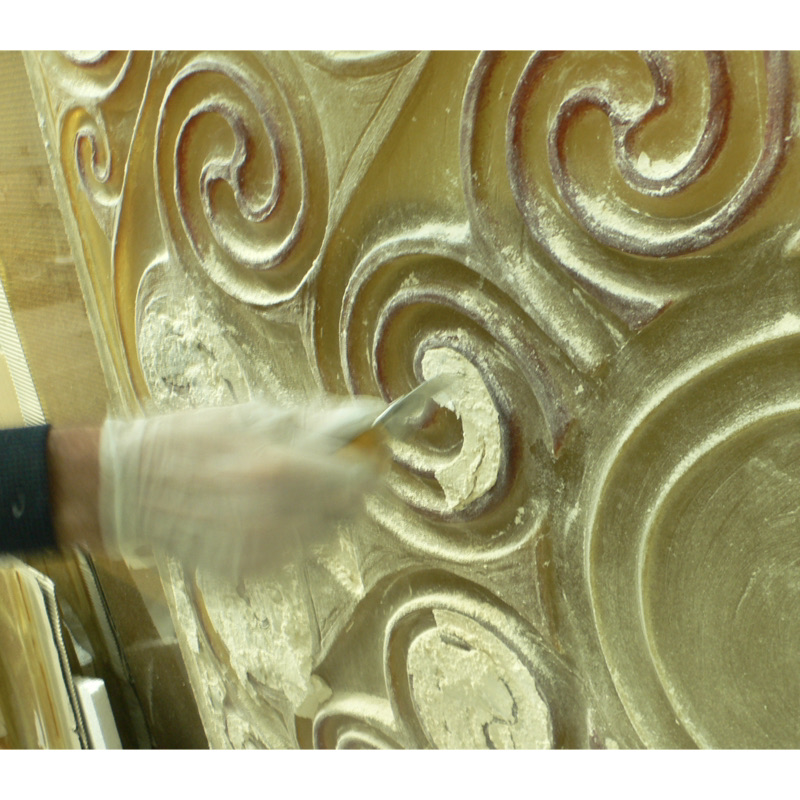
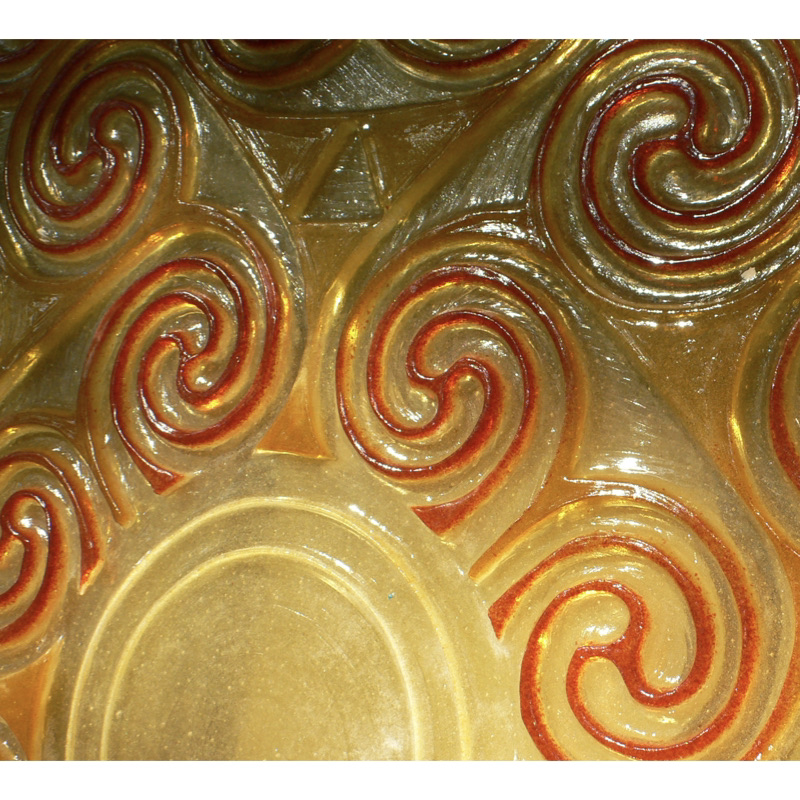

glen of tranquility
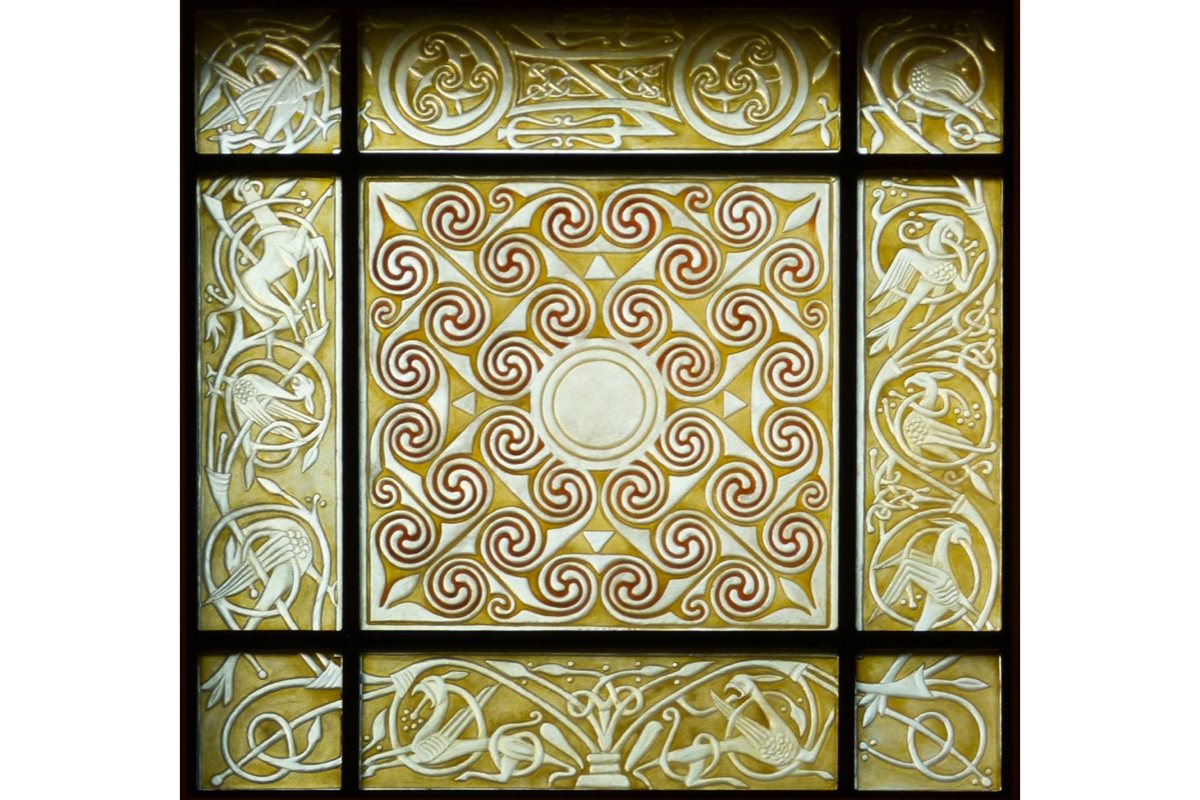
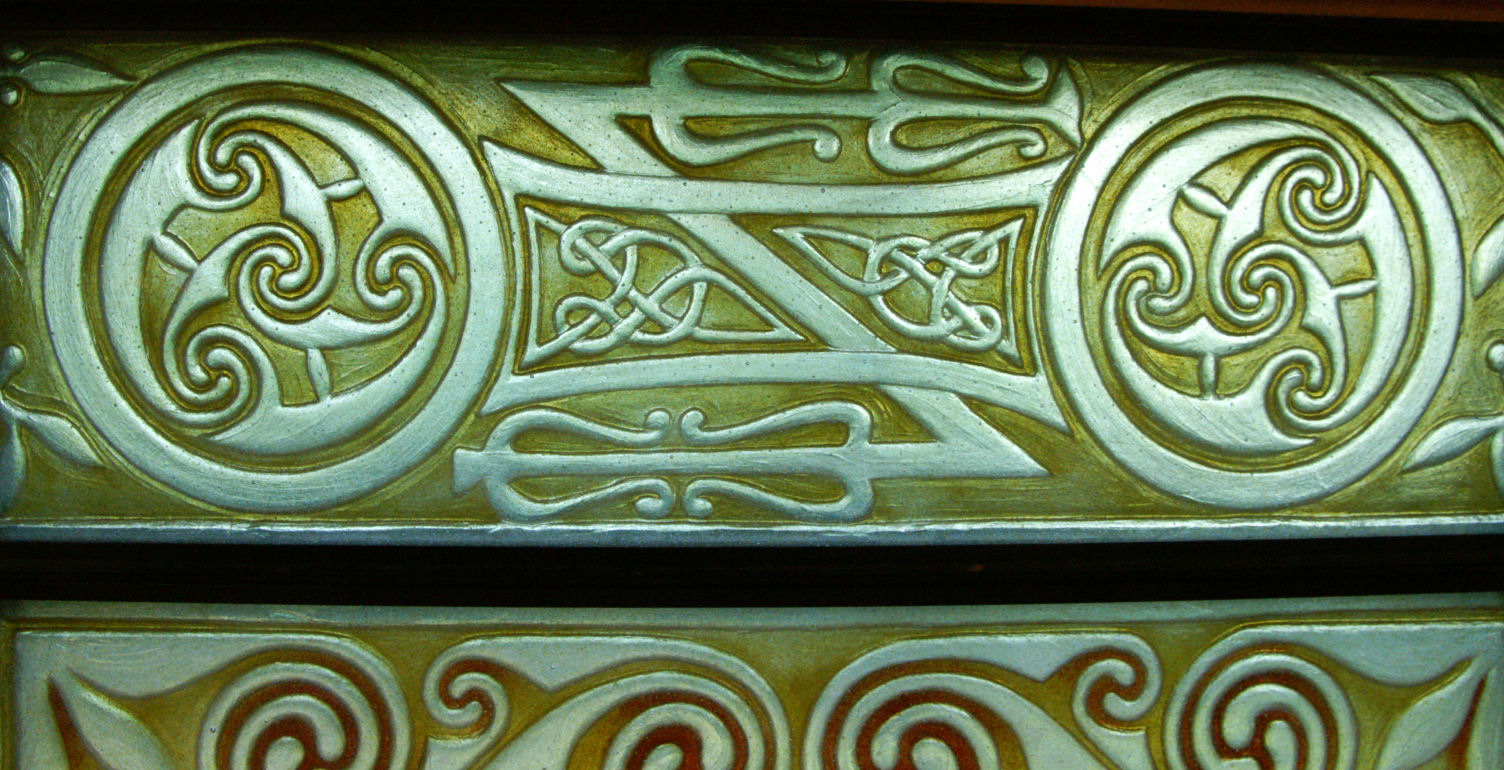
the window
Questions and Answers
Why is the Glenmorangie still house called the Cathedral?
The name was coined by the marketing team at LVMH, who have owned the Glenmorangie brand since 2004. It is a fitting description: the still house is tall, hushed, and dominated by the extraordinary height of the Glenmorangie stills — the tallest whisky stills in Scotland. The idea of placing a significant window in this space was therefore not merely decorative. It was architectural, even theological, in its ambition.
What is the Hilton of Cadboll stone and why was it chosen as the theme?
The Hilton of Cadboll stone is one of the finest examples of Pictish relief carving in existence, dating from around the eighth century AD. It was found on the Ross-shire coast not far from Tain, making it a genuinely local reference for the distillery. The Glenmorangie signet is derived directly from the stone's central motif. Since the original stone is itself a relief sculpture, it seemed entirely appropriate that a window based on it should also be a relief — glass kiln carved and shaped rather than flat and painted.
Where is the original Hilton of Cadboll stone now?
The original stone is now housed in the National Museum of Scotland in Edinburgh. At the distillery site in Tain, a detailed full-size replica was commissioned by local people and carved by sculptor Barry Grove, resolving the sections that had been lost or damaged over the centuries. It was Barry Grove's replica that I was able to study on location during the design process.
The base section of the original stone — which was excavated separately and was not available to Barry Grove when he made his replica — can be seen in Balintore, a small village on the Seaboard of Easter Ross a few miles from Tain. It was there that I was able to study the original carving in perfect condition. What struck me immediately was that the rounding of the edges of the carved elements was not the result of erosion, as I had assumed — they were carved rounded. That understanding directly influenced the way the spiral forms were resolved in the window.
What is Bullseye glass and why was it chosen?
Bullseye glass is an American art glass manufactured specifically for fusing — the process of melting glasses together in a kiln. What makes it unusual is that every colour within the Bullseye range is chemically compatible with every other. Most glasses expand and contract at different rates when heated and cooled, which causes incompatible glasses to crack apart after fusing. Bullseye's compatibility across its entire palette makes it uniquely suited to the kind of complex, multi-coloured fused relief work this window required.
How was the window actually made?
The window consists of nine panels, with the largest measuring approximately 1.35 metres square. For each panel, a relief form was hand-carved from a high-temperature resistant material — carbon fibre board — with every line, depth, and transition of the Pictish spiral pattern resolved in the form before any glass was placed. A base sheet of clear glass, 12mm thick, was prepared with a layer of amber and gold Bullseye frit spread across it. The frit-covered glass was then placed on the form and fired in the kiln at over 800°C. The glass melted into the form, taking up its relief pattern. Each firing and cooling cycle took approximately 18 hours. The forms were completely destroyed in the firing process, making every panel unique and unrepeatable. The work was made at the Derix Glasstudios in Taunusstein, Germany.
How heavy is the window?
The centre panel alone weighs approximately 170 kilograms. The window was transported from Germany to Tain and installed on scaffolding in the still house — a considerable logistical undertaking for a work of this weight and fragility.
How did the whisky colours come about?
The original design concept used clear float glass, which when slumped onto a form takes on a beautiful silvery quality. This was accepted by Glenmorangie, but with a proviso — could whisky colours be introduced? This request set off a period of sustained experimentation. The solution was to use crushed Bullseye glass frit in amber and gold tones, spread as a layer across the base glass before firing. When the glass melts, the frit fuses into the surface, becoming permanently part of the glass rather than sitting on top of it. The colours of the finished window — amber, copper, and gold — are not applied or painted. They are part of the material itself.
Is the window permanent?
Yes — fused glass is one of the most permanent of all artistic mediums. The colours cannot fade because they are not dyes or pigments applied to a surface. They are part of the glass structure itself, fused at over 800°C. The window will not deteriorate, discolour, or require restoration under normal conditions. It is designed to remain part of the Glenmorangie still house for as long as whisky is produced there.
What is the significance of this project within John Kenneth Clark's practice?
The Glenmorangie window was the project that opened up an entirely new direction in the practice. The Bullseye fusing technique developed here — glass frit melted onto carved relief forms — was subsequently used for the Stations of the Cross and the main windows at Sacred Heart Cathedral, Kericho, Kenya, and then developed further for the ten-metre Dalmore Still House Window in 2025. Two whisky distillery commissions fifteen years apart, both using a technique born from the original Glenmorangie brief, both made at the same studio in Taunusstein.
Where can the window be seen?
The window is installed permanently in the still house at Glenmorangie Distillery, Tain, Ross-shire, Scotland. The distillery is open to visitors and offers tours of the still house. Contact the sales department at Glenmorangie direct.