
Millennium Window — Glasgow Cathedral
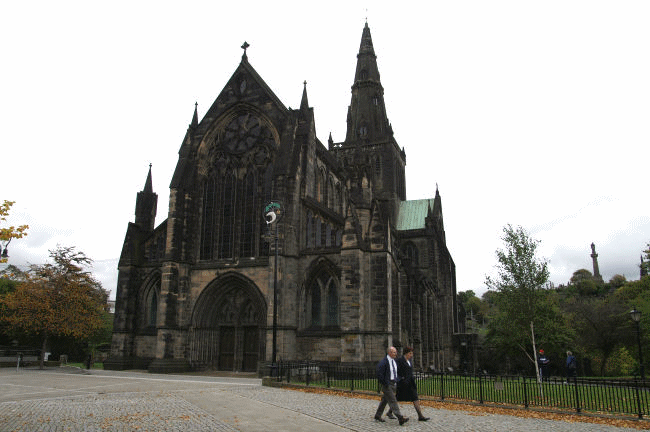
Glasgow, Scotland — 1999
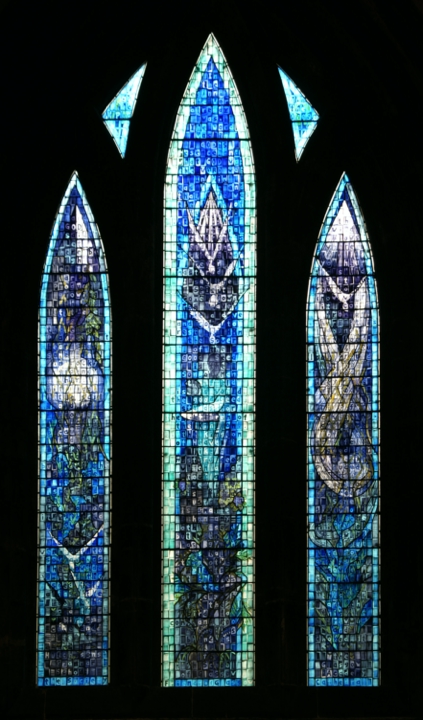
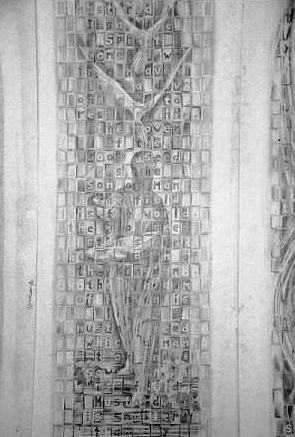
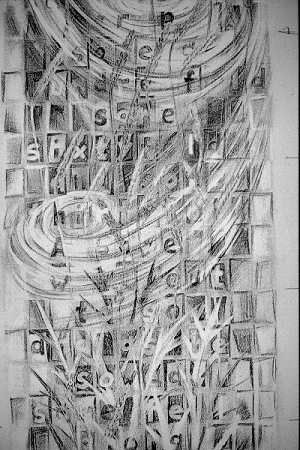
Word and image woven into glass — a window that can be read on two levels simultaneously, like the layered qualities of music.

The Commission
The Brief
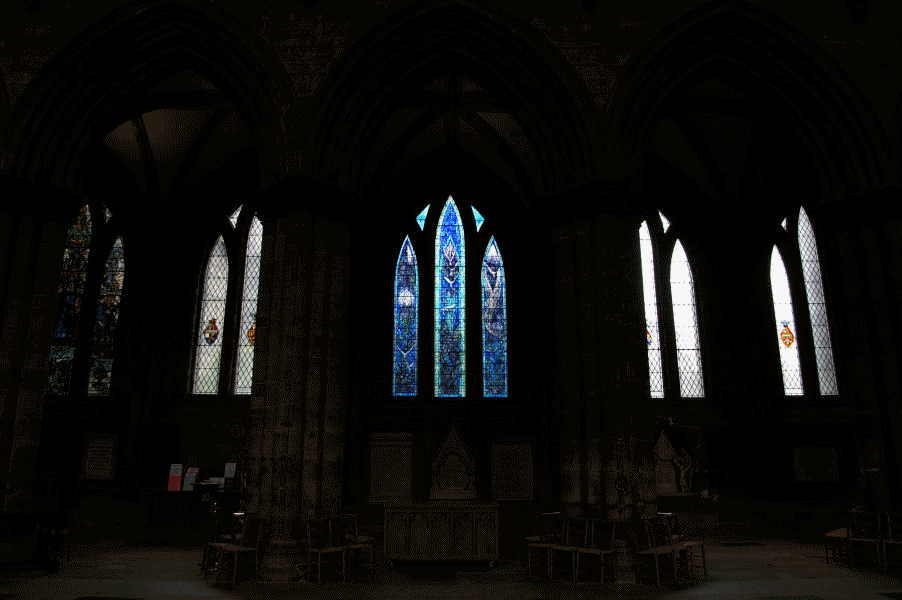
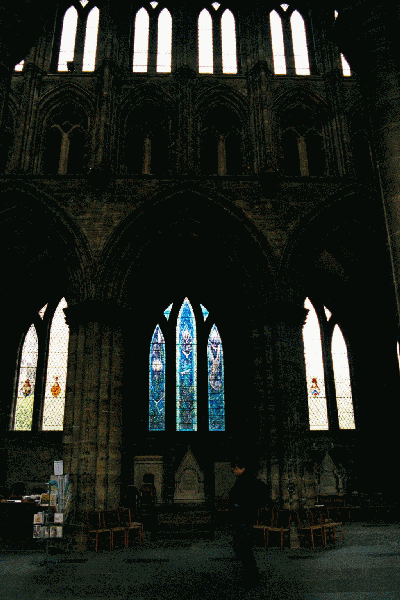
The Millennium Window was commissioned to mark the year 2000 — the observed birth of Christ — and was funded jointly by three schools with long connections to the Cathedral: The Glasgow Academy, Hutchesons' Grammar School, and The High School of Glasgow, with additional support from the Friends of Glasgow Cathedral and Historic Scotland. The brief asked for a work that was modern and of its time, distinct from the other windows in the Cathedral.
The theme given was Growth — physical, intellectual, and spiritual.
The Concept
The Parable of the Sower is one of the few New Testament teachings that addresses growth directly and can be given symbolic form. It works on several levels simultaneously — the seed that falls on different ground becoming a meditation on how teaching is received, how faith develops, how the smallest thing can become something vast. The Parable of the Mustard Seed carries the same thought: that the seemingly insignificant can grow to become a shelter for others.
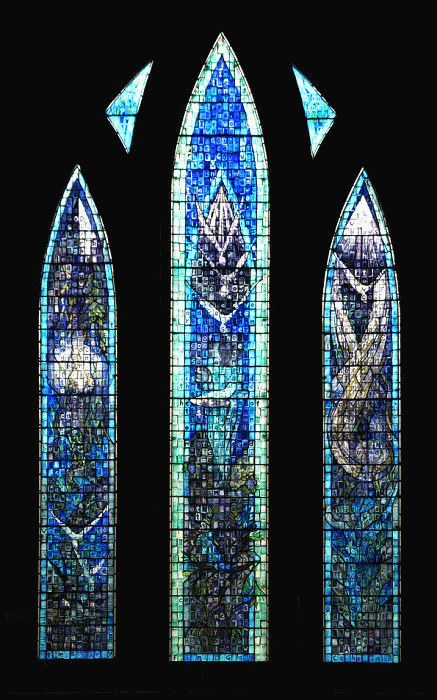
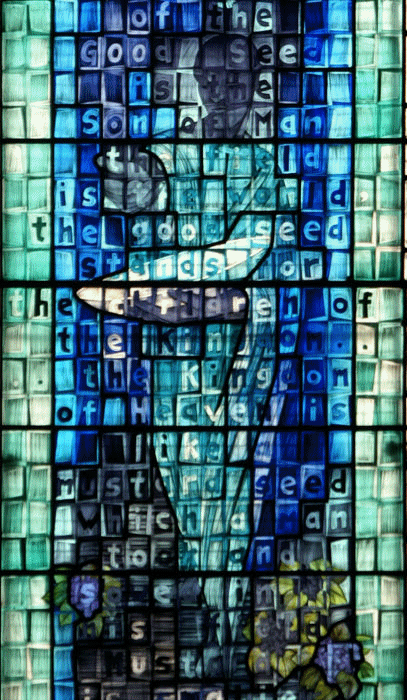
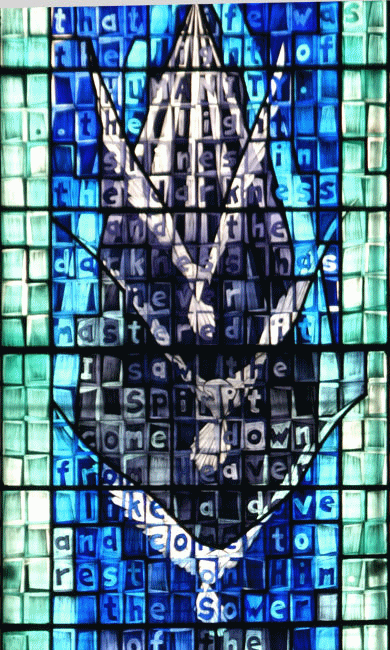
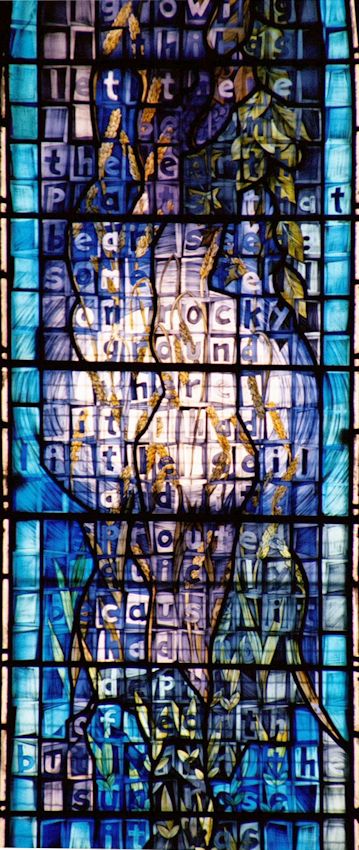
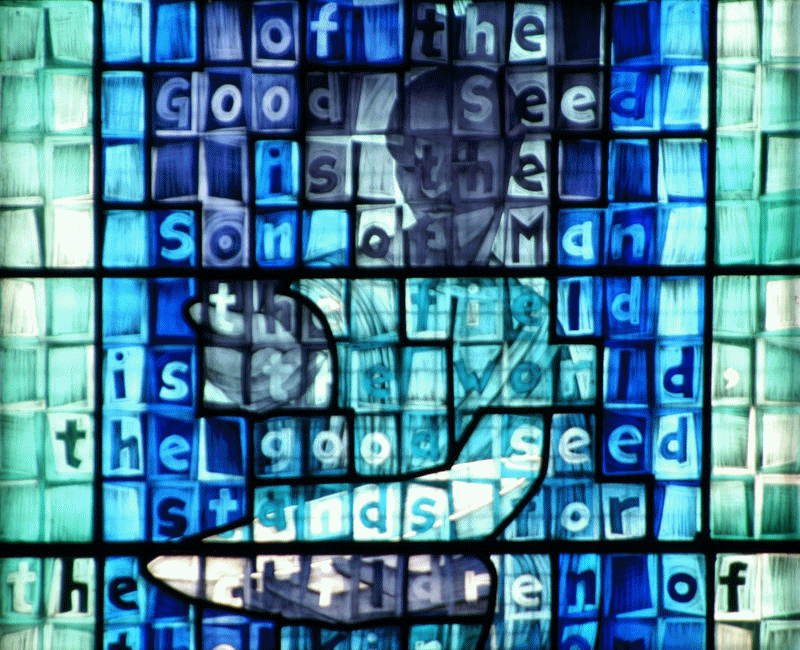
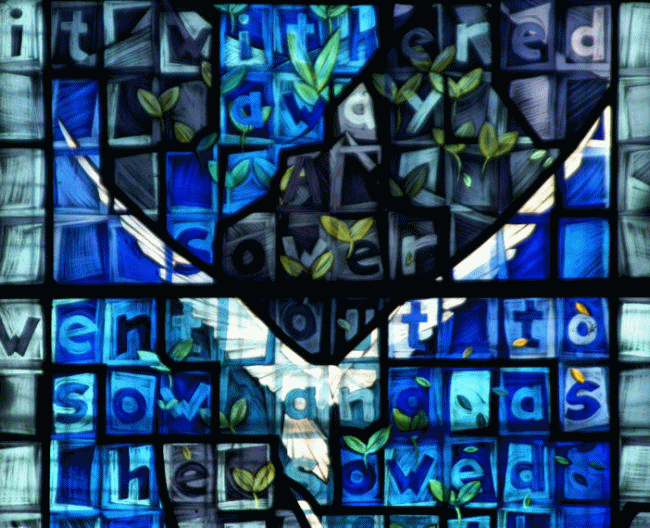
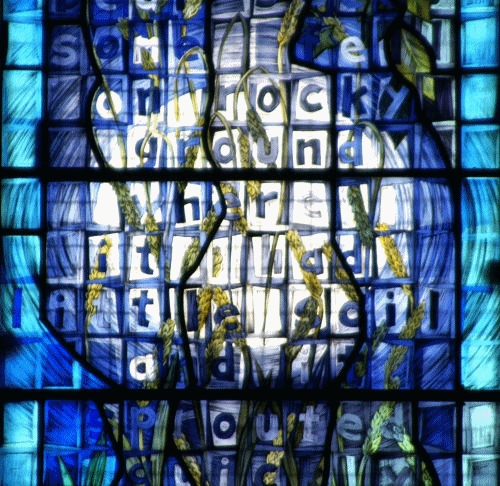
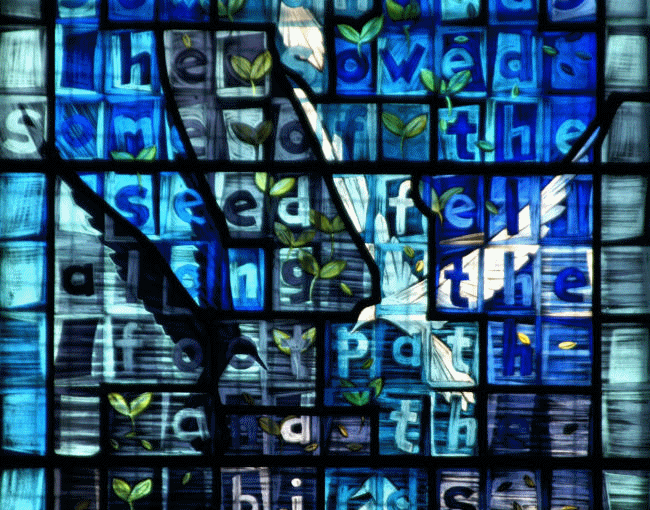
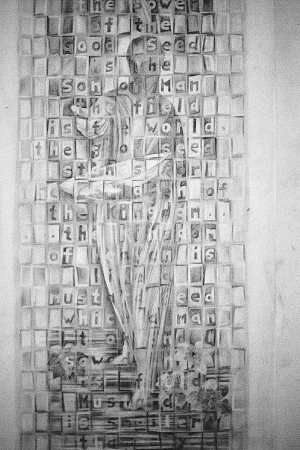
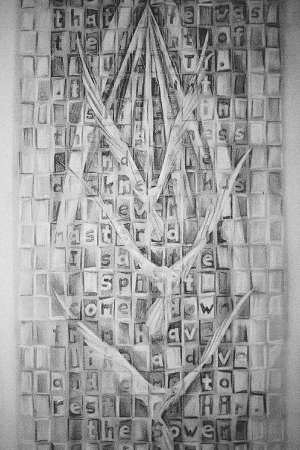
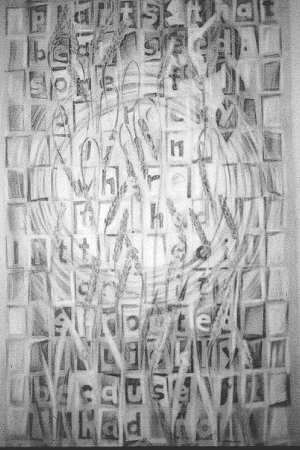
These parables are the foundation of the window. But the concept has a second dimension — the combination of text and symbol working together across the entire surface of the glass. What is written in the text is symbolised in the same area of the window. The words and the images are not separate; they inhabit the same space, counterpointing each other the way a musical quotation is counterpointed by harmony.
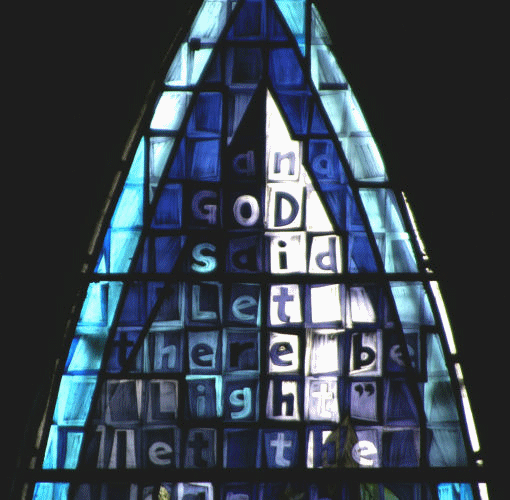
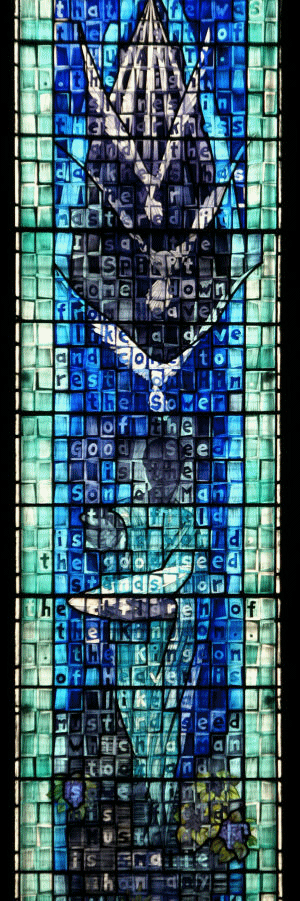
The window is also a Trinity window. Since this is a three-lancet composition, the Trinity needed to be structurally expressed — but the centre lancet is taller and wider than the two flanking lights. To resolve this, a smaller lancet was inserted within the central window, creating three sections of equal proportion. The Trinity is further expressed through the Creed: God of God, Light of Light, Very God of very God. In the upper section of each lancet, three representations of light — the separation of light from darkness in Genesis, Christ as the light of humanity, and the light of wisdom through the Spirit — correspond to the three persons of the Trinity.
Additional symbolic references to the Eucharist — wheat and vine — and to Baptism are woven throughout.
The Three Lancets
First Lancet
"God said, 'Let there be light.'" — Genesis 1:3
"Let the earth produce growing things; let there be on the earth plants that bear seed." — Genesis 1:11
"Some fell on rocky ground, where it had little soil, and it sprouted quickly because it had no depth of earth; but when the sun rose it was scorched, and as it had no root it withered away." — Matthew 13:5–6
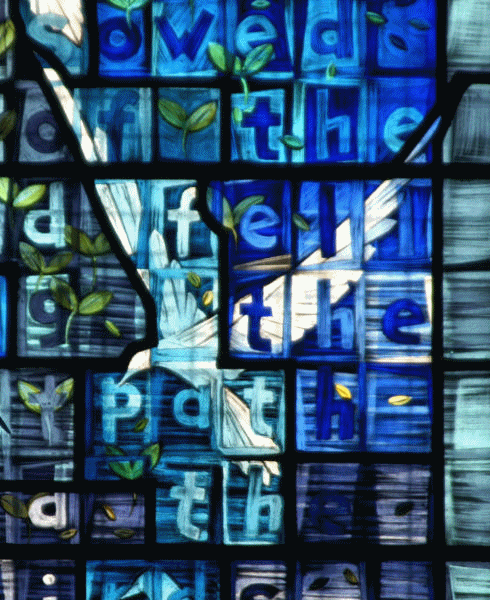
"A sower went out to sow, and as he sowed, some of the seed fell along the footpath; and the birds came and ate it up." — Matthew 13:3–4
Middle Lancet
"The Word already was. The Word was in God's presence, and what God was the Word was." — John 1:1–2
"In him was life, and that life was the light of humanity. The light shines in the darkness and the darkness has never mastered it." — John 1:4–5
"I saw the Spirit come down from heaven like a dove and come to rest on him." — John 1:32
"The Sower of the good seed is the Son of Man. The field is the world; the good seed stands for the children of the Kingdom." — Matthew 13:37
"The kingdom of heaven is like a mustard seed, which a man took and sowed in his field. Mustard is smaller than any other seed, but when it has grown it is taller than other plants; it becomes a tree, big enough for the birds to roost among its branches." — Matthew 13:31–32
Third Lancet
"The wind blows where it wills; you hear the sound of it, but you do not know where it comes from or where it is going." — John 3:8
"Look around at the fields: they are already white, ripe for harvesting." — John 4:35
"And some of the seed fell on good soil, where it produced a crop, some a hundredfold, some sixtyfold, and some thirtyfold." — Matthew 13:8
"Some fell among thistles; and the thistles grew up and choked it." — Matthew 13:7
At the base of each lancet the names of the three schools are inscribed, with the Friends of Glasgow Cathedral credited alongside them.
Gallery
Technique


Method
The window is made entirely from traditional techniques and materials. The glass is mouth-blown flashed antique glass — a thin layer of colour bonded to a paler base — worked through multiple layers of acid etching to build up the complex tonal range visible across the surface. Black glass paint was applied and fired to reinforce depth and line. Silver stain — which transforms clear glass to amber and blue glass to green — was painted on where required and fired into the surface.
The panels are leaded and installed directly into the stonework of the Cathedral, supported by stainless steel bars. The result is a surface in which text and symbol are inseparable — the word made, literally, into light.
Millennium Window — Glasgow Cathedral
Material — Mouth-blown flashed antique glass
Technique — Acid etching, glass painting, silver staining, traditional leading
Commissioned — 1999
Funded by — The Glasgow Academy, Hutchesons' Grammar School, The High School of Glasgow, Friends of Glasgow Cathedral, Historic Scotland
Location — Glasgow Cathedral, Glasgow, Scotland